الأرشيف الشهري: ديسمبر 2025

Went to enjoy safari, lion climbed on top of the car, see what happened next, Viral Video

Went to enjoy safari, lion climbed on top of the car, see what happened next, Viral Video

An old but heartbreaking video is going viral again on social media, turning the thrill of jungle safari into a terrifying experience. This terrifying footage was filmed at the Lion End Safari Park in Hartbeespoort, South Africa in July 2019, in which a pack of lions surround a car full of tourists. In the viral video, you can see a group of lions approaching a car full of tourists. Then a large lion climbs onto the hood of the car and claws at the door. Meanwhile, the rest of the herd surrounds the car on three sides. The scary moment comes when the lion breaks the side mirror of the car. Imagine how scared the people sitting in the car must have been. However, the driver hastily reversed the car slowly. After some effort, the lion finally jumped down, and the camper was relieved. The park’s general manager, Andre Lecoq, said the three little lions were very excited to see the vehicles that day. He also said that the lions seen in the video were new to the camp, and maybe that’s why they were acting like that. The scary video went viral after it was re-shared on Facebook on Wednesday, October 1. It has been viewed over 32,000 times so far. The user who shared the video, Kabusiman, asked people: “If you were the driver, what would you do?” Netizens are also commenting on the video. One user wrote: “Oh my God! What big lions!” Another said: “They are so big they can tear a car to pieces.” Another user jokingly said: “I have to go out and fix my wing mirror.” Share this story Tags

Will 2026 witness the bursting of the artificial intelligence bubble?

Will 2026 witness the bursting of the artificial intelligence bubble?

Discussions about the artificial intelligence bubble did not subside during the final months of 2025, in light of the continued rise in technology stock valuations, amid a wave of excessive enthusiasm about investments and fears of missing out on opportunities in the sector. But at the end of the year, most global banks took a calmer tone on the possibility of a bubble next year, while some warnings came from economists and prominent figures. In the following report, we review the most prominent things that have been said about the valuations of stocks of artificial intelligence companies in 2026. Continued concerns about investment returns. Barclays Private Bank has seen that the controversy surrounding the artificial intelligence bubble revolves around whether current valuations and investment spending are outpacing the rate of returns. Read more: AI bubble fears grip Wall Street But the bank noted that today’s AI leaders differ from the tech companies of the late 1990s in that they are profitable, cash-flow-generating companies closely tied to business infrastructure and consumers. Although valuation risks persist, weaknesses relate more to shrinking multiples or slowing technology adoption, rather than the collapse of business models. Diversification and selectivity remain among the best tools for achieving profits while reducing risks. Amid fears that bets on artificial intelligence will not bear fruit, sector companies must achieve revenues estimated at two trillion dollars by 2030 to meet demand… as shown in the following video: For BlackRock, bubbles accompany all major economic transformations, and the matter may happen again. But she pointed out that the bubbles often grow gradually and don’t become obvious until they burst. The P/E of the seven largest companies does not herald a bubble. For this reason, BlackRock closely monitors the size of investments and potential returns, and considers them the basis of its analysis of the path of transformation led by artificial intelligence. Despite the concerns, the company still takes a supportive stance on risk, viewing artificial intelligence as the primary driver of US company stocks. From the perspective of P/Es, John Belton, portfolio manager at Ghibli Funds, which manages assets worth $35 billion, believes that the artificial intelligence market has not yet entered a valuation bubble, noting that the average P/E for the seven major tech companies (Apple, Microsoft, Amazon, Alphabet, Meta Platforms, Tesla, or N3259 times times when times are excluded, or N259). Tesla, compared to P/Es of 39.9 times. 90 times for companies in late 1999 during the dot-com bubble. You may be interested in: Are we witnessing an artificial intelligence bubble? The bond market does not think so, confirming that these valuations reflect strong fundamentals and are not the result of excessive speculation. Among other reasons Beltone relies on is that high capital spending in the artificial intelligence sector is often directed at strengthening existing and profitable companies, rather than on untested bets, and the use cases are expanding to include areas such as self-driving, robotics, biosciences and generative software, improving the possibilities of achieving real commercial returns, he says. NVIDIA rejects the idea of ​​a bubble. However, he believes that the infrastructure investment cycle will inevitably peak, but the challenge lies in knowing the timing and shape of that peak. Read more: Nvidia’s strong forecasts calm fears of an artificial intelligence bubble. Nvidia also rejected the idea that its activity is part of a bubble, although it acknowledged the presence of concerns in the market. CEO Jensen Huang said that what the company is building is based on real demand and tangible technological transformation, not speculation, adding: “We see a completely different reality than those who describe the market as a bubble.” Are investors buying a dream? Bank of America expects the artificial intelligence sector to experience a “bump” in its road, as the sector could face a slowdown in growth or a rise in prices due to the lack of clarity on the actual path to profitability. Also read: Nvidia’s stock falls amid growing doubts about its dominance in artificial intelligence. Savita Subramanian, head of US equity strategy and quantitative analysis at the bank, said it was still unclear whether gains from artificial intelligence would be achieved. She sees the ability to conserve energy as a major hurdle that takes time to build. “At the moment, investors are buying a dream,” she added. “Goldman” warns against the rise in the sector’s debt, while “Goldman Sachs” focused on the credit aspect, as it explained that since 2022 the technology giants known as “hyperscalers” have financed their spending on artificial intelligence from cash flow, but this trend has begun to change with the rise in expenses and the stability of dividends. This led some of these companies to go to debt markets. See also: Profit-taking pressures Wall Street, hits US artificial intelligence stocks. Through the end of October 2025, five of these companies had issued bonds worth about $90 billion, within the total investment bond market of $1.5 trillion for the same period. The bank expects debt reliance to accelerate as artificial intelligence moves from infrastructure to applications, especially if profits slow and stock dividends don’t fall. Although the financial position of companies remains strong, the rise in debt levels requires monitoring during 2026, according to the bank’s report, which also pointed to the importance of monitoring companies’ ability to achieve tangible returns from their investments. Artificial intelligence valuations will continue to increase in 2026. Capital Economics expects valuations to continue to inflate through 2026 before any major correction occurs later, and warned that the current environment bears many of the hallmarks of a bubble, such as high valuations and exaggerated expectations, while this was most evident in the Bank. technology and artificial intelligence sector is the biggest expected threat to the markets in 2026 based on the results of a recent survey reported by the website. Investing.com. Also read: What are Deutsche Bank’s expectations for global markets in 2026? The German Bank explained that the decline in valuations due to the decline in enthusiasm for artificial intelligence constitutes the first risk next year, noting that US technology stocks are classified among the highest levels of bubble risk. Economist Ruchir Sharma also believes that the rise of artificial intelligence bears all the hallmarks of historical financial bubbles, from overinvestment and exaggeration in valuations to extreme concentration of ownership and resort to borrowing. He pointed out that any increase in interest rates during 2026 could lead to a sharp correction. Bill Gates: Artificial intelligence has the characteristics of a bubble. Bill Gates also warned that artificial intelligence could have the characteristics of a bubble, explaining that not all high valuations in the sector will survive. He said that some companies will see a decline in their value, despite the huge momentum around the technology. Speaking to CNBC on the ninth of this month during Abu Dhabi Finance Week, the founder of Microsoft indicated that artificial intelligence is “the most important thing that is happening right now,” but he added: “It does not mean that all companies with high ratings will win, but rather the field will be very competitive.” He added that AI “is only a bubble in the sense that some of these valuations will not go up, they will go down.” “DeepMind”: A fix is ​​expected at a later stage for artificial intelligence. Demis Hassabis, co-founder and CEO of “DeepMind”, believes that the current state of mania in the financing of artificial intelligence has led to the emergence of bubbles, centered on excessive valuations that can reach tens of billions for some startups, which are still in their early stages and have not yet started their real activity. You may also be interested in: Bezos: The boom in artificial intelligence spending is a “bubble” that will pay off. On the other hand, Hassabis distinguishes between these evaluations and the investments of large technology companies, which he sees as supported by real business. However, an “overcorrection” is expected at a later stage, as usually happens in major technological transformations when the outlook turns from doubt to obsession, according to the “Google DeepMind: The Podcast” podcast, which Business Insider reported on.


Uber is teaming up with China’s Baidu to launch a “Robotaxi” in the UK

Uber is teaming up with China’s Baidu to launch a “Robotaxi” in the UK

Uber Technologies Inc said it was working with Baidu Inc to launch a trial of self-driving taxis in the United Kingdom, following in the footsteps of US self-driving technology company Waymo, which began similar trials in London this month. Uber explained in a statement on Monday that a pilot program will be launched in London during the first half of 2026 using Baidu’s Apollo Go RT6 self-driving taxis, with the service actually starting in the city before the end of next year. The spread of self-taxi services is accelerating globally, with Chinese companies such as Baidu and Weride Inc, along with Waymo, a subsidiary of Alphabet Inc, at the forefront of this race. Uber and WeRide already operate self-driving services in Abu Dhabi, with plans to expand in the Middle East, while Baidu is conducting similar experiments in Abu Dhabi, Dubai and Switzerland. Also Read: Uber and Baidu collaborate to launch Robotaxi in Asia and the Middle East. Uber Partnerships In 2020, Uber abandoned the development of self-driving technologies, instead starting to establish partnerships with a group of companies working in this field. Uber CEO Dara Khosrowshahi said in an interview with Bloomberg TV this month that the company plans to offer self-driving services in more than ten markets by the end of next year. Other transportation platforms are adopting similar strategies: Lyft Inc. has signed a deal with Baidu to operate autonomous taxis in Europe, while in Southeast Asia Grab is partnering with Chinese companies WeRide and Momenta. The profitability of the autonomous taxi model remains unclear, as Pony AI Inc and WeRide continue to suffer losses despite selling shares to raise financing.

What to watch this week? Check out major theatrical, OTT releases; several new movies and web series to choose from

What to watch this week? Check out major theatrical, OTT releases; several new movies and web series to choose from

Between December 22 and 28, 2025, several films and web series will be released in theaters and on OTT platforms, including Hollywood’s Anaconda and Bollywood’s Tu Meri Main Tera Main Tera. What to watch this week? Check out major theatrical, OTT releases; several new movies and web series to choose from Several films will be released in theaters and on OTT platforms between December 22 and 28, 2025. There are web series and direct-to-OTT releases for films. Take a look. The major Hollywood release is Anaconda, starring Jack Black, Paul Rudd and Daniela Melchior. The sequel to Lake Placid vs. Anaconda is scheduled for release on Christmas 2025. This year’s Christmas release for Bollywood is Tu Meri Main Tera Main Tera Tu Meri. The romantic comedy, starring Kartik Aaryan and Ananya Panday, also features Jackie Shroff and Neena Gupta. Two major Hindi dubbed films will also be released: Vrusshabha (Malayalam) and 45 (Kannada). Both the films will release on December 25. Regional cinema has a wide slate this week. Marathi films include Gotya Gangster and Savitri Kalyugatali. Gujarati cinema releases Vande Bharat Via USA. Malayalam brings Vrusshabha, Sarvam Maya and Valathu Vasathe Kallan. Telugu has a long list, with Shambhala, Eesha, Champion, Bad Girlz, Dhandoraa, Patang and GOAT Tamil movie releases which include Retta Thala and Sirai. Kannada offers 45, Mark and Lucky Charlie. Bengali films include Projapati 2, starring Mithun Chakraborty and Dev. Lawho Gouranger Naam Rey, starring Paoli Dam, Anirban Bhattacharya and Parambrata Chatterjee, and Mitin: Ekti Khunir Sandhane, starring Koel Mallick, will also release. OTT releases this week This week brings a mix of new web series and movies on Netflix. Viewers will see fresh seasons and new launches in multiple languages. Netflix is ​​releasing several English shows, including Carl the Collector, Sicily Express and a new season of King of Collectibles: The Goldin Touch. Stranger Things Season 5 Volume 2 arrives on December 25th. This will be the biggest release of the week. In movies, Netflix is ​​adding Elway, Eden and the Hindi drama Goodbye June. A new stand-up special, Tom Segura – Teacher, also premieres this week. The documentary Cover-Up will be released on Christmas 2025. Netflix will also stream the Telugu theatrical film Andhra King Taluka. Ek Deewane Ki Deewaniyat, starring Harshvardhan Rane and Sonam Bajwa, releases on December 26. ZEE5 will start streaming it this week.

Revolver Rita OTT Release Date: When and Where to Watch Keerthy Suresh’s Tamil Movie Online

Revolver Rita OTT Release Date: When and Where to Watch Keerthy Suresh’s Tamil Movie Online

Revolver Rita’s OTT release comes only a few weeks after its big screen premiere. Revolver Rita OTT release date Revolver Rita OTT release date: This holiday season comes as a treat for film-lovers who are in for a treat with the latest Tamil movie releases lined up for online release this Christmas. The latest addition to the list of these new titles releasing this weekend includes Revolver Rita, a Tamil comedy thriller movie starring Keerthy Suresh. Revolver Rita’s OTT release comes only a few weeks after its big screen premiere, making it one of the very few new Tamil movies that has made a quick transition from theaters to digital screens. The JK Chandru directorial movie released in theaters on November 28. Revolver Rita OTT Release Date: When and Where to Watch According to the official announcement of OTT Ritabutant, Revolver will mark Netflix’s streaming OTT debut. The Tamil comedy thriller movie will start streaming online from December 26. In an Instagram post, Netflix announced the release date of Revolver Rita, saying, “Rita becomes Revolver Rita when you mess with her family 🔫😎 Watch Revolver Rita on Netflix available December 26th.” The movie will be available in Tamil, Telugu, Kannada and Malayalam. The movie will not release in Hindi, at least for now. It is unclear when, or if, the Hindi version of Revolver Rita will stream online. Revolver Rita: Plot Revolver Rita revolves around Rita, a young woman who lives with her mother and two sisters. The movie navigates the strange series of events in her life, which takes a sudden turn with the entry of a drunken gangster. Rita’s family ends up killing the intruder gangster, and the story then turns to covering up the crime and hiding the body. Soon another gang is introduced, causing much confusion in the aftermath of the murder. This movie makes for the perfect recipe for mystery and comedy. Revolver Rita: Crew Keerthy Suresh Radhika Sarathkumar Sunil Redin Kingsley Revolver Rita: Review and Box Office Numbers Keerthy Suresh received a lot of praise for her lively performance in Revolver Rita. However, social media was flooded with bad reviews for the movie. Revolver Rita enjoyed a decent box office collection of ₹4.76 crore gross, according to industry tracker Sacnilk. Its net collection was ₹ 3.99 crore. Other OTT Releases This Week Andhra King Taluka Ek Deewane Ki Deewaniyat Goodbye June

India and New Zealand announce conclusion of FTA negotiations; agreement to be signed later

India and New Zealand announce conclusion of FTA negotiations; agreement to be signed later

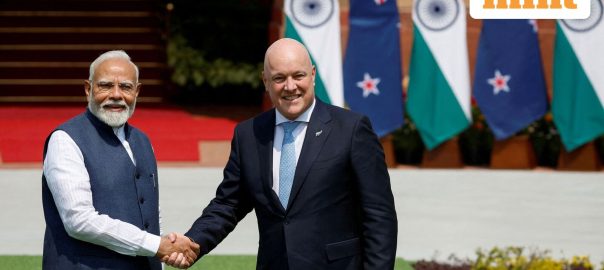
India and New Zealand have signed a comprehensive Free Trade Agreement (FTA), according to a government statement, marking a major economic and strategic milestone in India’s engagement with the Indo-Pacific region. The FTA will be signed at a later date, similar to the UK deal, where trade negotiations were concluded in May and the pact was formally signed in July. The FTA was jointly announced by Prime Minister Narendra Modi and New Zealand Prime Minister Christopher Luxon, the statement said. The deal stands out as one of India’s fastest-closing VTAs. The negotiations were formally launched on 16 March 2025 during the meeting of India’s Minister of Commerce and Industry Piyush Goyal and Todd McClay, the Minister of Trade and Investment, New Zealand. The agreement was concluded after five rounds of negotiations and several in-person and virtual sessions. Officials on both sides described the agreement as comprehensive in scope, covering goods, services, investment, rules of origin, customs facilitation, technical barriers to trade and sanitary and phytosanitary measures. The agreement aims to provide predictable market access and clearer regulatory pathways for businesses, while addressing long-standing concerns on both sides. For India, the FTA is part of a broader strategy to expand its trade footprint in the Indo-Pacific and diversify export markets at a time of global trade uncertainty. New Zealand, a major agricultural exporter with strong interests in the region, sees the agreement as a gateway to the Indian market and a way to strengthen economic engagement with one of the world’s fastest growing major economies. Bilateral trade between the two countries has grown steadily but remains relatively small. India’s merchandise trade with New Zealand reached $1.3 billion in 2024-25, up nearly 49% from FY24, albeit from a relatively modest base. Indian exports to New Zealand are dominated by pharmaceuticals, textiles, engineering goods and information technology services, while imports consist largely of agricultural products, including wool, fruits and dairy-related items. Officials said the agreement seeks to redress this imbalance by easing tariff and non-tariff barriers and encouraging two-way investment. Focusing on people, farm produce Goyal said: “Today, this free trade agreement is about building trade around people and launching opportunities – for our farmers, for our entrepreneurs, for our students, for our women and for our innovators. The agreement drives yields and farm incomes and drives modern agricultural productivity. It opens doors to your region through Indian well-integrated businesses and export businesses. learn, work and grow on a global stage.” The elimination of tariffs on 100% of its tariff lines will provide duty-free access for all Indian exports. This market access increases the competitiveness of India’s labour-intensive sectors, including textiles, apparel, leather, footwear, marine products, gems and jewellery, handicrafts, engineering goods and automobiles. This will benefit Indian artisans, women, youth and MSMEs—integrating them deeper into global value chains. According to the government statement, India has secured commitments across a wide range of high-value sectors, including IT and IT-enabled services, professional services, education, financial services, tourism, construction and other business services, opening new opportunities for Indian service providers and high-skill service providers. Commerce Secretary Rajesh Agrawal called it “a new generation trade agreement … with complementarity at its core.” “India’s Strengths [will] expand exports, support labor-intensive growth and power services. New Zealand is getting deeper, more predictable access to India’s large and growing economy. The movement of people-students, professionals and skilled workers converges these strengths,” Agrawal added. The FTA provides improved entry and residence provisions for Indian professionals, students and youth, including employment opportunities during studies, post-study work options, dedicated visa arrangements and a working holiday visa framework. Also envisaged is a new “temporary employment entry professional Indian occupation visa pathway a skilled visa pathway for Indian occupation 5,000 visas at any given time and a stay of up to three years,” the statement added. It will cover Indian professions such as AYUSH practitioners, yoga instructors, Indian chefs and music teachers, as well as professionals from high-demand sectors such as IT, engineering, healthcare, education and construction – strengthening workforce mobility and services – focus on a dedicated action plan, a dedicated action plan, an app-gri deal on productivity improvement, technology, research collaboration and quality improvement are envisaged to support income growth for Indian farmers. Under India’s Make in India vision, they are also expected to take advantage of their presence in New Zealand and gain access to the wider Pacific Island markets in 2014. Earlier agreements include: Mauritius in February 2021, the UAE (February 2022), Australia (April 2022), the European Free Trade Association (February 2024), the UK (July 2025), and Oman on December 18 this year and the final leg of the European Union (EU) arrangements were also negotiated New Delhi is expected to start trade talks with Qatar soon.

Oppo Reno 15 Series 5G Teases for India Launch with New Design and Colors: What to Expect

Oppo Reno 15 Series 5G Teases for India Launch with New Design and Colors: What to Expect

Oppo has teased the India launch of its Reno 15 Series 5G, with new blue and white designs. The range is expected to include four models with AI portrait cameras, large batteries and premium features, with prices expected to start below Rs. 40,000. Oppo is gearing up to expand its Reno 15 Series 5G lineup in India, following the smartphones’ debut in China earlier this year. (X: Tech Home) Oppo is gearing up to expand its Reno 15 Series 5G lineup in India, following the smartphones’ debut in China earlier this year. The company has now officially teased the India launch, offering an early look at the design, while keeping key details including pricing and launch dates under wraps. Oppo Confirms India Launch Oppo has announced the upcoming arrival of the Reno 15 Series 5G in India through a teaser shared on X. The post, captioned “Coming Soon”, confirms that the smartphones will be launched in the country, although the company has not revealed when the launch will take place. The teaser video highlights one of the models in blue and white color options, giving a glimpse of the refreshed design language for the range. New colors and refreshed design The blue variant appears to have a gradient finish inspired by aurora-like light patterns, while the white version features a ribbon-style design on the rear panel. According to earlier reports, this white finish could be linked to the rumored Reno 15 Pro mini, which is expected to arrive in a Glacier White color style with a distinctive textured look. Both color options reveal a redesigned camera island. The module features three prominent circular lens rings and an LED flash, with a layout reminiscent of older Pro-level iPhone models. Four Reno 15 models tipped for India According to tipster Paras Guglani aka @passionategeekz, Oppo may launch as many as four smartphones under the Reno 15 series 5G in India. The lineup is said to include the Reno 15, Reno 15 Pro, Reno 15c and the Reno 15 Pro mini, which is an unusually wide release for the brand. Camera and battery highlights All four models are expected to feature an AI portrait camera, continuing Oppo’s focus on photography-led smartphones. The Reno 15 Pro mini tends to stand out with a high-resolution 200 megapixel camera sensor. The standard Reno 15 may offer a 120x periscope telephoto lens and is reportedly positioned under Rs. 50,000 in India. Meanwhile, the Reno 15c is said to debut with a large 7,000mAh battery and could be priced below Rs. 40,000, making it a more affordable option in the range. The Reno 15 Pro can add premium features like wireless charging support, further setting it apart from the rest of the lineup. What to expect next While Oppo has confirmed the launch of the Reno 15 series 5G in India, official specifications, pricing and availability details are yet to be revealed. More information is expected to emerge as the launch date approaches, with Oppo likely to unveil additional teasers in the coming weeks.

Dani Rodrik: Neoliberalism is dead—here is the new economic consensus that replaced it

Dani Rodrik: Neoliberalism is dead—here is the new economic consensus that replaced it

Significant segments of the American left and right agreed on the broad outlines of economic policy. (AP) Summary The new consensus has three principles: tackle concentration of economic power, restore dignity through good jobs and let the state actively shape the economy through industrial policy. In Washington, Trump appears to be going along with this bipartisan consensus, but he is not. The post-neoliberal consensus is here, but don’t look for it in US President Donald Trump’s policies. After a decade of backlash, it is time to accept not only that neoliberalism is dead, but also that a new consensus is taking its place. Remarkably, significant segments of the American left and right have agreed on the broad outlines of economic policy. Conversations in universities and think tanks today are driven by a common understanding that deviates significantly from the neoliberal orthodoxy of the past 50 years. The first element of the new consensus is a recognition that the concentration of economic power has become excessive. The concern is expressed in different forms by different groups. Some directly complain about inequality in income and wealth and its corrosive effects on politics. Others are concerned about market power and the adverse implications for competition. For still others, the key problem is financialization and the distortion of economic and social priorities it causes. The remedies on offer also vary, from wealth taxes to vigorous antitrust enforcement to campaign finance reform. But the desire to combat the economic and political power of corporate, tech and financial elites is widespread, uniting progressive supporters of US Senator Bernie Sanders with populists such as podcast host and former Trump adviser Steve Bannon. The second element of the new consensus is the importance of restoring dignity to people and regions left behind by neoliberalism. Good works are essential to this agenda. Work is not just a means of providing income. They are also a source of identity and social recognition. Good jobs are the foundation of a robust middle class, which is the foundation of social cohesion and a sustainable democracy. Disruption is inevitable in a world of economic change. Until the 1990s, many safeguards—job protection, trade restrictions, price controls, and regulations that reined in finance—limited the impact on workers and communities. For neoliberals, these safeguards were inefficiencies that needed to be removed. They overlooked the economic and social distress that job losses due to technological change, globalization or economic liberalization would cause. The third component of the emerging consensus is that government has an active role to play in shaping the economic transformation that is needed. Markets on their own cannot be trusted to produce economic resilience, national security, innovation for advanced technologies, clean energy or good jobs in distressed regions. The government must encourage, twist arms and subsidize. Industrial policy has moved from the fringes of economic discussion to its center. Taken together, these three principles provide a new understanding of the goals and instruments of economic policy that is both novel and, on the whole, commendable. But the devil is always in the details. Actual outcomes will be determined by specific policies chosen and implemented. Consider the good job goal. Here, left and right seem to have reached a consensus on the desirability of relocation and revival of manufacturing. Historically, the industrial workforce played a crucial role in the production of equitable middle-class societies. But automation and other technological forces have transformed manufacturing into a labor-losing sector. Even China has lost manufacturing jobs by the millions in recent years. So, even if manufacturing investment and production is revived in the US and Europe, the impact on employment is likely to be small. Like it or not, the future of employment lies in services—care, retail, hospitality, logistics, the gig economy and so on. Any approach to good jobs that does not focus on organizational and technological innovations in these services will inevitably disappoint. There are, of course, other important reasons for supporting manufacturing. Advanced manufacturing, along with the digital economy, plays a major role in innovation and national security. It makes sense to deploy industrial policies that focus on these economic activities, in addition to policies that focus on labor-absorbing services. But here too the ‘how’ matters as much as the ‘what’. Caveats also apply to industrial policies. It can go badly wrong when they promote corruption or serve narrow corporate interests. Unfortunately, Trump’s approach offers little comfort on this point. The US president’s trade policies and dealings with technology companies have been erratic, transactional and without a coherent long-term strategy that would serve the public interest. The post-neoliberal principles of economic policy provide us with a broad checklist for evaluating real agendas—and Trump’s fails miserably. It pays lip service to good jobs and industrial policy in the service of economic transformation, while promoting greater concentration of wealth and power. A model of welfare state capitalism that attempts to revive a long-dead industrial economy is hardly an antidote to neoliberalism. The best that can be said about Trump’s approach to the economy is that it is an experimental phase in the post-neoliberal transition. The good news is that future policymakers don’t have to look far for new guidelines. The new consensus is already here. ©2025/Project Syndicate The author is a professor of international political economy at the Harvard Kennedy School, and the author of ‘Straight Talk on Trade: Ideas for a Sane World Economy’.

Stocks to buy or sell: Nagraj Shetti of HDFC Securities recommends two stocks for the short term

Stocks to buy or sell: Nagraj Shetti of HDFC Securities recommends two stocks for the short term

Stocks to buy or sell: Nagraj Shetti of HDFC Securities recommends two stocks for short-term—Borosil Renewables and NMDC Stocks to buy for short-term: Nagaraj Shetti of HDFC Securities believes Indian stock market sentiment is bullish, despite the Nifty 50 index trading in a narrow range with an upside on Monday. Stocks to Buy or Sell: The Indian stock market has shown resilience amid consolidation, with the Nifty 50 index rebounding sharply from key supports near 25,700-25,800 last week and repeatedly testing the bearish trendline resistance around 26,000. On December 19, the index traded firmly in the 25,950-26,000 zone, rising nearly 0.5-0.6% intraday, while broader market sentiment improved. The 50-share index extended its gains on Monday and definitely regained the 26,000 levels, hitting an intraday high of 26,148.40 and coming close to the lifetime high of 26,325.80. Mid-cap and small-cap indices outperformed, reflecting a turnaround in strength and renewed buying interest after declines, which helped stabilize the overall market breadth. The week was characterized by volatile yet constructive price action, with selling pressure absorbed at lower levels. Stock market today Nagraj Shetti, Senior Technical Research Analyst at HDFC Securities, believes Indian stock market sentiment is bullish, despite the Nifty 50 index trading in a narrow range on Monday with an upside upside. This indicates weakness and a tendency to take profits at higher levels. Commenting on the outlook for the Nifty 50 index after opening the gap on Monday, Nagraj Shetti said, “After showing weakness with limited movement in the middle of December 25, the market has seen a sharp breakout since Friday and is currently trading 170 points higher on Monday. The overall chart pattern indicates a decisive breakout from a crucial barrier around a crucial triangle around A 25,900 to 26,000 levels The overall chart pattern of the Nifty is bullish, and one can expect the next upside targets to be around the 26,300 to 26,400 levels.Nagraj Shetti’s stock recommendations For short-term stocks to buy, Nagraj Shetti of HDFC Securities has recommended two stocks: Borosil Renewables and NMDC ₹547.80, Stop Loss ₹532. After a sharp breakout on Monday, we observe the formation of an important reversal pattern as indicated by the daily and weekly RSI. More upside is expected at ₹78.10, target ₹82, stop loss ₹76. The recent downward correction is seen in this metal stock, and bullish higher tops and bottoms are observed on the daily chart, and the RSI shows a positive indication. The views and recommendations above are those of individual analysts or brokerage firms We advise investors to check with certified experts before making any investment decisions.

Kramat Jati market traders affected by fire sales at temporary kiosk

Kramat Jati market traders affected by fire sales at temporary kiosk

Jakarta – Traders affected by the fire in the C2 sub-grocery building at Kramat Jati Main Market, East Jakarta, have started selling again. The DKI Jakarta Provincial Government (Pemprov) has prepared temporary shelter kiosks (TPS) in the market area. “In accordance with the governor’s order, we are dealing with it quickly so as not to disrupt the supply and procurement of commodities. Starting today, Sunday (21/12), traders can activate kiosks at TPS while improvements are made by Pasar Jaya,” said DKI Jakarta’s regional secretary’s assistant for economy and finance (Monday, in20/20, Suharini, Suharini statement, in20/20/20). Scroll TO CONTINUE CONTENT The TPS prepared by Perumda Pasar Jaya is about 50 meters from the fire site. The area is built on a parking area of ​​approximately 1,800 square meters and can accommodate approximately 350 merchant stalls. A number of traders welcomed the DKI Provincial Government’s move. One of the affected traders, Ahmad Alam Syah, is grateful to return to trade. “We are very grateful to the DKI Provincial Government and Perumda Pasar Jaya. With this kiosk at the TPS, we can resume trading,” said Ahmad. According to Ahmad, the facilities at TPS are sufficient to meet traders’ needs. The most important thing, he said, is that buying and selling activities can resume so that traders’ income does not stop for too long. “It’s only right. The important thing is that we can trade again. Hopefully our business will be smoother and more blessed in the future,” he said. Suparto, a papaya trader who has been selling at the Kramat Jati main market for 15 years, said the same. He hopes that the TPS settlement process can be completed soon so that all traders can move and sell again. “In terms of speed, it’s good. Fast and responsive from Pasar Jaya and the DKI Provincial Government. I hope I can move here as soon as possible so I can trade again,” said Suparto. He also hopes that the burnt kiosk can be rebuilt immediately so that trading activities can return to normal. “We want the kiosk that caught fire to be renovated immediately so that it can return to its original location,” he said. It is known that the fire on (15/12) affected 350 business premises with 117 fruit traders, especially bananas and papaya. The DKI Provincial Government distributed assistance of IDR 5 million to each affected trader. Apart from that, merchants also get easy access to business credit through Bank Jakarta. All areas affected by the fire are insured so that the renovation process will be carried out through an insurance mechanism. In the future, the DKI Provincial Government will also add safety facilities, including fire hydrants, as well as strengthening the electrical system to prevent similar incidents from happening again. (bell/lir)