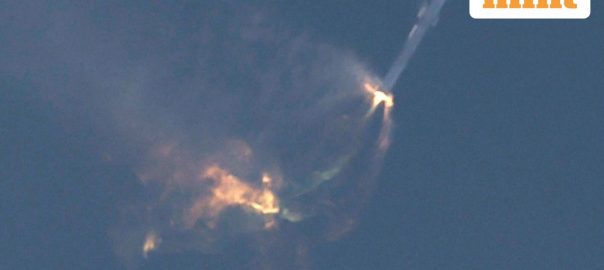
Copyright © HT Digital Streams Limited All rights reserved. SpaceX’s next-generation Starship spacecraft, atop its powerful Super Heavy rocket, spins before blasting off. REUTERS/Joe Skipper (REUTERS) Summary FAA documents reviewed by The Wall Street Journal show an explosion of SpaceX’s Starship on January 16 posed a greater danger to aircraft in the skies over the Caribbean than was publicly known. A JetBlue plane was en route to Puerto Rico when its pilots heard from air traffic control that they were about to fly through a danger zone. The plane initially went into a holding pattern to stay safe. “You want to go to San Juan,” an air traffic controller told the JetBlue flight crew, “it’s going to be at your own risk.” The risk that January night was from an experimental SpaceX rocket ship exploding minutes after liftoff. The plane’s pilots had a decision to make while north of San Juan: continue the journey through a possible rocket debris field, or risk running low on fuel over water. Two other planes – one operated by Iberia Airlines and a private jet – ran into similar trouble. They declared fuel emergencies and traveled through the temporary no-fly zone, Federal Aviation Administration records show. All three flights, which according to records were carrying a total of about 450 people, landed safely. FAA documents reviewed by The Wall Street Journal show the Jan. 16 explosion of SpaceX’s Starship posed a greater danger to aircraft in midair than was publicly known. The explosion rained fiery debris over parts of the Caribbean for about 50 minutes, the documents said. A piece of debris hitting an aircraft in flight can have catastrophic consequences: severe aircraft damage and passenger deaths. A JetBlue spokesperson said the airline is confident that all of its flights safely avoid locations where debris has been reported or observed. An Iberia spokesman said its flight “passed through the area after all the actual debris had already fallen, so there was no safety risk.” Air traffic controllers scrambled to keep planes away from the debris areas, but that increased their workload and led to a “potential extreme safety risk,” according to one FAA report from an air traffic facility in New York. After the explosion, at least two planes flew too close together, requiring a controller to intervene to avoid a collision. The documents also said that SpaceX did not immediately inform the agency about the explosion through an official hotline. The FAA requires launch operators to use the hotline to quickly alert a failure. Controllers need the information about debris areas to alert pilots and get them out of the way. The no-fly zones were activated four minutes after the Starship vehicle began to stop providing data on its test flight, FAA documents show. SpaceX confirmed with the agency that Starship disintegrated 15 minutes after that, according to the documents. Controllers in Miami first heard about the explosion from pilots who saw the debris, documents show. Other FAA officials learned of the incident via an internal chat. SpaceX, the world’s busiest rocket launcher, declined to comment. The explosion of the company’s Starship vehicle has alarmed the airline industry and US government officials, given the effect it has had on air travel and because the number of space operations is set to increase. FAA leaders convened a panel of experts in February to re-examine how to deal with debris risks from spaceflight failures, following up on earlier work on the issue. That effort gained urgency in March after a Starship vehicle exploded during another test launch. But FAA officials suspended the safety review in August, an unusual move because the agency’s own policies require such reviews to address safety risks, according to people familiar with the matter. The agency will deal with debris risk at a different policymaking level, an FAA official said in an email reviewed by the Journal. The agency said it stopped the review because most of the group’s safety recommendations had already been implemented and it needed to consult additional experts, including those outside the US. “The FAA will not hesitate to act if additional safety measures are required,” the agency said. More launches, more risk? The FAA oversees aircraft that navigate U.S. airspace and licenses commercial rocket launches, as well as missions where vehicles return to Earth from space. Debris could become more of a safety risk as the rate of rocket launches increases. In a recent forecast, the FAA said it expects to oversee an annual average of about 200 to 400 rocket launches or re-entries in the years ahead. That compares to about two dozen of those operations on average each year between 1989 and 2024. View full image … SpaceX, led by Chief Executive Officer Elon Musk, wants to power many of those flights with Starship. Standing more than 400 feet tall, Starship is the most powerful rocket ever developed, according to the company. SpaceX promoted the vehicle through test missions taking off from its complex outside Brownsville, Texas. During those flights, Starship is designed to soar across the Gulf of Mexico, which the Trump administration calls the Gulf of America, fly through space and splash into the Indian Ocean. With 11 Starship missions under its belt, SpaceX plans future flights that will take the spacecraft over Florida, Mexico and North Atlantic flyways. Developing new rockets involves trial and error — and sometimes explosions. One-third of rockets active since 2000 have failed on their first flights, according to data from Chris Kunstadter, a longtime space insurance executive. SpaceX has long viewed setbacks as a way to gather data to make improvements, and used the approach during Starship’s development. “With a test like this, success comes from what we learn,” the company said after a November 2023 Starship mission. After failures during that flight, the FAA took another look at debris risks and procedures for air traffic controllers. The agency previously developed a way to deal with “catastrophic risk to air traffic interacting with space missions” by creating temporary no-fly zones called debris response areas, according to internal documents reviewed by the Journal. The areas are laid out before each rocket launch and are only activated when an accident could result in debris falling. When activated, air traffic controllers are supposed to direct aircraft out and away from affected areas, provide alternate routes or have aircraft hold positions in the air. But the areas lined up for the January launch included only US airspace with radar coverage. That left a pocket of foreign airspace that could face the same debris risks, but where flying would be allowed. “Didn’t go well” At 5:37 PM Eastern on January 16, SpaceX Starship launched on its seventh test flight. Mission objectives included analyzing the performance of upgrades to Starship’s propulsion system and heat shield tiles. The flight ended prematurely—and spectacularly—more than eight minutes later. Some pilots and passengers on flights around the Caribbean could see the fiery debris pouring out of their cockpits and cabins. Jose Rodriguez, then a pilot for regional airline Silver Airways, reported to air traffic control “seeing pieces of debris and intense fire between the 1 and 2 o’clock positions” while operating a flight to San Juan, according to an FAA report. “It was impressive,” Rodriguez said in an interview. He initially thought it was space junk that burned up in the atmosphere at a safe distance hundreds of kilometers away. A controller informed him that it was actually a “rocket launch that didn’t go well,” according to the FAA report. His flight continued normally. Bob Beresh saw the explosion from his window seat on a Delta Air Lines flight from Barbados to Atlanta. “It was amazing,” said Beresh, a commercial photographer and self-described space geek. But he later wondered, “What would have happened if we were closer?” Delta said the airline had no reports of any of its flights being conducted near space debris. The airline said four of its flights were diverted due to the explosion for refueling that night. Closer to the debris zones, controllers in San Juan, Puerto Rico, radioed pilots to figure out how to keep them away from potential danger. They put some planes into holding patterns and diverted others when they had enough fuel. A controller told one plane’s crew they would have to declare an emergency to land at San Juan. “In that case,” a pilot responded, “we declare distress: Mayday. Mayday, Mayday.” In a post on X about the explosion, Musk said: “Success is uncertain, but entertainment is guaranteed!” Capt. Jason Ambrosi, president of the Air Line Pilots Association union, called for better communication with pilots, flight dispatchers and airlines so they can better plan for rocket launches. Those measures may include loading more fuel, finding alternative routes or delaying departure. “We shouldn’t be surprised when that happens,” Ambrosi said. Residents of the island territory of Turks and Caicos later reported finding pieces of burnt rubber and destroyed heat tiles washed ashore. In February, SpaceX said in a post on its website about the seventh flight that, “While an early end to the flight test is never a desired outcome, the measures put in place before launch have demonstrated their ability to keep the public safe.” Shana Diez, a SpaceX executive focused on Starship, said at an industry event that month that the company has a good relationship with the FAA’s Air Traffic Control and is working closely with that group. She said SpaceX wants to work with the FAA to improve air traffic controllers’ real-time awareness of where launch vehicles are during flight and where any possible debris could land. If vehicles could be tracked in real time, “you could almost treat it like a weather event,” she said. “There is no technical reason that that type of system is not possible.” Mission Control Before the FAA safety panel finishes reviewing SpaceX’s January explosion, the agency allowed the company to launch a mission on the evening of March 6. That decision upset some contestants, people familiar with the matter said. The March Starship explosion ended with fewer problems for air travel. No planes reported declaring fuel emergencies or flying through rocket waste areas, according to FAA records and people familiar with the matter. Before the flight, the FAA also closed the gap in debris areas over international airspace. Check out the full image of debris from the March 6 Starship launch as seen from Turks and Caicos, in a handout image courtesy of X-user Mark O’Henly. By May, the FAA safety panel identified high aviation safety risks from rocket accidents, including an aircraft declaring an emergency or having to land suddenly at an alternate airport, or controllers being overloaded. The suspension of the safety review in August came as a surprise to some panelists. Regulators at the FAA would be upset if plane makers or airlines stopped their own safety reviews before fixing problems, current and former FAA officials said. The FAA said it would not hesitate to convene another panel or do n “whatever it takes” as it addresses security concerns. It said regulators overseeing its air traffic unit would be part of the process. SpaceX has conducted three more Starship launches since the March explosion. During one, the vehicle’s spacecraft did not explode quickly. It was able to fly for a longer period of time before it spun out of control and broke apart near its intended location in the Indian Ocean. Starship stayed on the course set by the company in its last two missions. Early next year, SpaceX is expected to launch a new and more powerful version of Starship. Speaking on a podcast in September, Musk said the vehicle “might have some initial teething pains because it’s such a radical redesign.” Write to Andrew Tangel at [email protected] and Micah Maidenberg at [email protected] Get all the Business News, Market News, Breaking News Events and Latest News Updates on Live Mint. Download the Mint News app to get daily market updates. more topics #SpaceX #elon musk Read next story