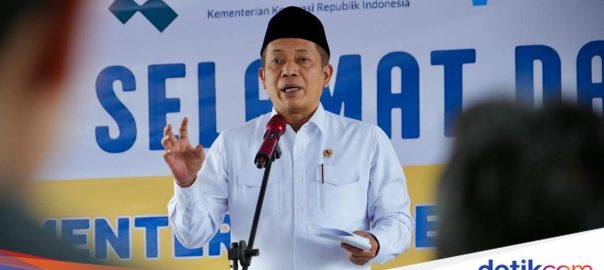
Jakarta – Minister of Cooperatives, Ferry Juliantono supports the South Bandung Livestock Cooperative (KPBS) Pangalengan entering the milk processing industry (IPS) sector to produce UHT milk, not just pasteurized milk. In this way, KPBS Pangalengan can expand its role in the Free Nutritious Meal (MBG) program ecosystem. “I hope that pasteurization technology can be developed here by building a new factory line to produce UHT milk,” Ferry said in his statement on Monday (22/12/2025). He conveyed this during a working visit to KPBS Pangalengan, Bandung Regency, West Java, on Monday (22/12). Scroll TO CONTINUE CONTENT During his visit, Ferry also witnessed the signing of a cooperation agreement between KPBS Pangalengan and the Jayabaya 2 Nutrition Fulfillment Service Unit (SPPG) regarding the procurement of pasteurized milk in the MBG program. Then, the signing of a cooperation agreement between KPBS Pangalengan and Kopdes Merah Putih Margamulya regarding cooperative training. Ferry explained that UHT and pasteurized milk products from KPBS Pangalengan will be sold in all outlets owned by Kopdes Merah Putih throughout Indonesia. “For the needs of the UHT industry, I also ensure that LPDB Cooperative is ready to help if KPBS Pangalengan needs additional financing,” he said. He further added that the milk processing industry in Indonesia so far gets its raw materials from imported skimmed milk powder, which is allowed to enter because there are regulations. Currently, however, this ministerial regulation no longer exists. “If the cooperative is able to build a milk processing industry, it will absorb milk products from our dairy farmers. I guarantee we will ban the importation of skimmed milk powder because it will kill dairy farmers,” said Ferry. In fact, continued Ferry, Indonesia should continue to increase the number of dairy cattle population that is really needed by farmers. “We will support the government’s program to increase the dairy cow population and then support its advocacy to prevent the entry of imported skimmed milk powder,” he stressed. Ferry also encouraged all dairy cooperatives to become the same as private companies so that they can produce their own powdered milk. “We don’t want to be unable to compete with private companies, so that the impact can be felt directly by the community,” he said. Regarding the MBG program, Ferry hopes that the presence of SPPG throughout Indonesia will be able to build a supply chain that originates from cooperatives, especially Kopdes Merah Putih. “Not only milk but also vegetables will also be provided by greengrocer cooperatives and so on. So, our aim is to build a cooperative ecosystem to meet the needs of SPPG in the MBG program,” he said. According to Ferry, milk quality and certification are the main basis for strengthening dairy cow producer cooperatives. Because milk is a strategic food product that has a direct impact on people’s health, especially children. “That’s why compliance with food quality and safety standards, as well as certification from upstream to downstream, from production at the farmer level, processing, to distribution, must be the biggest concern of cooperatives,” he explained. Ferry also reminded that the collective role of cooperatives is key in supporting the MBG programme. For this reason, milk producer cooperatives must be able to provide milk that is safe, fit for consumption, standardized and certified, with an orderly and accountable distribution system. “Provision for MBG requires not only product availability, but also collaborative readiness in management, recording, traceability and supply chain management. This is where cooperatives are tested to be promoted to become strategic partners of national programs,” he explained. Meanwhile, LPDB Chief Director Krisdianto said that KPBS Pangalengan is an LPDB partner that is in the good category. “They also have buyer partners such as Ultra Jaya and Frisian Flag, and several SPPGs in the MBG program,” said Krisdianto. In the future, Krisdianto hopes that KPBS Pangalengan can become the main supplier of Kopdes Merah Putih, especially for various dairy products. “This cooperative received revolving fund financing of Rp. 15 billion, and it was paid off,” he said. On the other hand, KPBS chairman Aun Gunawan explained that KPBS Pangalengan was established since 1969 and now has more than 4,500 members. KPBS Pangalengan has a cow population of 16 thousand and is capable of producing 80 tons of milk per day. To support the production and marketing of fresh milk, KPBS Pangalengan operates 28 integrated cooperative service points (IPC). Everything is managed by an Enterprise Resource Planning (ERP) based system. Of these centers, Aun said, eight are equipped with milk cooling systems, which allow for more efficient processing. “Starting from collecting milk at the farm level to sending it to the milk processing industry,” he explained. Currently, KPBS Pangalengan is actively involved in the MBG program by supplying milk to 50 SPPGs. “However, our milk is not dropped to SPPG, but goes straight to schools at the same time as SPPG. We prepare about 700 thousand cups per month,” concluded Aun. (acd/ega)