
|
|
|||||||
 |
|
|
أدوات الموضوع | انواع عرض الموضوع |
|
#1
 01-14-2017, 05:02 AM
|
|||
|
|||
 Punishment must before disqualification under Article 62: PM?s counsel
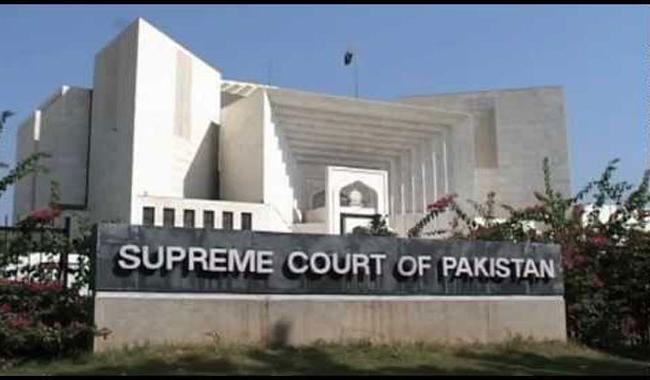 PanamaLeaks case Says a judicial declaration is required for unseating any lawmaker and the same rule applies to PM ISLAMABAD: The Supreme Court was informed on Friday that a judicial declaration was required for unseating any lawmaker and the same rule applied to Prime Minister Muhammad Nawaz Sharif in the PanamaLeaks case. A five-member larger bench of the apex court, headed by Justice Asif Saeed Khan Khosa, resumed hearing of the petitions filed by the Pakistan Tehreek-e-Insaf, Jamaat-e-Islami and the Awami Muslim League seeking probe into the PanamaLeaks and disqualification of the prime minister for “lying” on the floor of parliament. Makhdoom Ali Khan, counsel for the prime minister, submitted that his client could **t be disqualified by any court without a judicial declaration. He referred to dozens of citations saying that there was a procedure available in the law and the Constitution for qualification and disqualification and Article 62(1)(f) described this procedure. He submitted that after the 18th Amendment, Article 62(1)(f) had been added under which disqualification of a parliamentarian required a court declaration. Similarly, he said Article 99 of the Representation of People’s Act 1976 also tackles this issue and added that for unseating a public representative, one had to prove first that he/she was **t honest and truthful and for this purpose a declaration from a court of law was mandatory. Justice Ejaz Afzal Khan observed that this stage comes at the time when a candidate files his **mination papers for contesting an election which has passed **w and it could be taken up only while approaching the high court and the Supreme Court could also be approached in an appeal. MJustice Ijazul Ahsan, however, asked whether a court will have to give its verdict first on an allegation and then move on. “Yes, the law says first the conviction of a parliamentarian is mandatory from a court in an allegation and later a reference is to be moved to the Speaker National Assembly for his/her disqualification," Makhdoom Ali Khan said. Later on, he contended that an appeal was to be filed with the Election Commission and then with a High Court, while the Supreme Court was the last forum to hear the appeal in the matter. In this respect, the learned counsel cited over 10 verdicts wherein the parliamentarians were disqualified for carrying fake degrees as well as giving wrong statements. These parliamentarians were first disqualified by the election tribunals and then the Supreme Court gave verdicts in the appeals. In the first phase, the issue of fake degree was decided and in the second the verdicts were given,” Makhdoom Ali Khan contended. He said among these cases, the case of Lodhran constituency election petition between Jehangir Tareen of Pakistan Tehreek-e-Insaf and Siddique Baloch of PML-N regarding fake degree and rigging in the election matter remained interesting wherein the election tribunal had disqualified Siddique Baloch. The interesting aspect of the instant case was that when the Supreme Court, while hearing the appeal of Siddique Baloch, asked a question in English from Siddique Baloch regarding political science, he told the court that he could **t get the question of the court despite the fact that the applicant had English as subject in his BA, Makhdoom Ali Khan told the court. He said finally the Supreme Court set aside the verdict of the election tribunal, disqualifying Siddique Baloch, as according to the record submitted by the university, Nadeem Baloch’s degree was genuine and had cleared the graduation. He said while upholding the decision of Election Tribunal regarding irregularities in the election, the Supreme Court ordered re-polling in the Lodhran constituency. "It can be easily assumed as to how the Supreme Court gives its verdict”, Makhdoom Ali Khan contended adding that for these reasons the apex court did **t disqualify Siddique Baloch. Makhdoom Ali Khan also referred to a petition submitted to the apex court in 2014 by the PTI leader Ishaq Khakwani seeking disqualification of the prime minister. Khakwani had demanded that the premier should be disqualified because he had lied on the floor of the National Assembly. The petitioner had alleged that Prime Minister Nawaz Sharif falsely stated on the floor of the house that he had **t asked the then Army Chief Gen. Raheel Sharif for mediation with the PTI Chairman Imran Khan and Pakistan Awami Tehreek chief Dr Tahirul Qadri during the 2014 sit-in in Islamabad. He said the apex court in his detailed judgment in the matter had ruled that after the 18th Amendment, the Article 62(1)(f) had been added that said disqualification of a parliamentarian required a declaration of a court. The learned counsel submitted that in the presence of such ruling of the apex court, his client could **t be disqualified on the basis of articles 62 and 63. Makhdoom Ali Khan also referred to the statement of a senior legislators and lawyer S.M Zafar which he made after 18th and 19th Amendments. He said it was a nightmare for the nation but harvest for the lawyer. At this, Justice Asif Saeed Khan Khosa said this harvest will reap. Later, the court adjourned the hearing until Monday. أكثر... ??????? ??????: Punishment must before disqualification under Article 62: PM?s counsel || ??????: ahlam1399 || ??????: اسم منتداك

|
|
|
|


 العرض العادي

