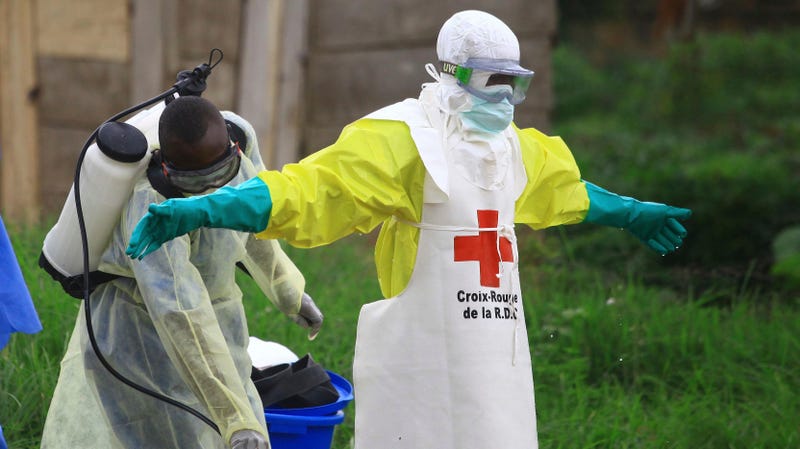
A health worker is sprayed with disinfectant after working in an
Ebola treatment center in Beni, Eastern Congo.Image: Al-hadji Kudra Maliro (AP)
The
Latest update on the current
Outbreak of
Ebola ravaging Africa shows the situation there continues to worsen. This past weekend, the Health Ministry of the Democratic Republic of the Congo (DRC)
reported that, as of February 10, there have been 811 confirmed or probable cases of the viral disease since August 2018. Out of these cases, 510 people have died,
Including around 100 children.
The
Outbreak so far is centered around the northeast of the DRC, in the regions of North Kivu and Ituri. It seemed poised to die down last fall, but a second wave of cases dashed that hope, and the number of new victims once again surged in January. Between January 15 and February 3, the World Health Organization
reported last week, there were 123 new confirmed cases alone. The current toll
represents the second largest
Outbreak of
Ebola in recorded history, thankfully still far behind the 2014-2016
Outbreak in West Africa that sickened
Nearly 30,000 people and
Killed Over 11,000.
On Sunday, the nonprofit Save the
Children highlighted the young victims of the current outbreak. According to the organization, there have been 97
Children Killed so far, with the majority under the age of five.
“We are at a crossroads,†Heather Kerr, Save the Children’s country director in the DRC, said in a
statement. “If we don’t take urgent steps to contain this, the
Outbreak might last another six months, if not the whole year. The DRC is a country suffering from violence and conflict and an extreme hunger crisis—some 4.6 million
Children are acutely malnourished. The main concerns for many people are safety and making sure they have enough to eat. But
Ebola has to be a priority too.â€
The violence and conflict in the DRC has steadily hampered efforts by health workers to track possible victims, isolate the infected, and vaccinate those in close contact. The U.S. has also
blamed its removal of
Ebola experts from the area on the violence, though experts and organizations elsewhere have sharply criticized the country for doing so. Many of the U.S. scientists pulled from the area, critics have
noted, have decades of expertise in managing previous
Ebola outbreaks.
Cultural barriers and misconceptions about the disease have also made stopping the
Outbreak more difficult.
“People have disrupted funerals because they didn’t believe the deceased had succumbed to the virus. Aid workers were threatened because it was believed they spread Ebola,†said Kerr. “We have to scale up our efforts to reach out to the vocal youth and community leaders to build trust and to help us turn this tide.â€
There have been a few hopeful signs, however.
According to the Health Ministry of the DRC,
Nearly 80,000 people have been vaccinated with an experimental vaccine manufactured by Merck. And though official data on the vaccine’s efficacy is still not available, WHO experts
believe it’s been highly effective (90 percent or higher). The WHO also expects that the currently available supply of vaccine will be enough to outlast the outbreak. So far, the fear that
Ebola would spread to neighboring countries like Uganda hasn’t come to pass, either.
In the U.S., two people were being monitored for possible
Ebola exposure in hospitals in
Pennsylvania and
Nebraska,
Including a
health worker who provided aid in the DRC. Both patients have now been cleared and sent home.
[
Health Ministry of the DRC,
Save The Children]
Source link
More