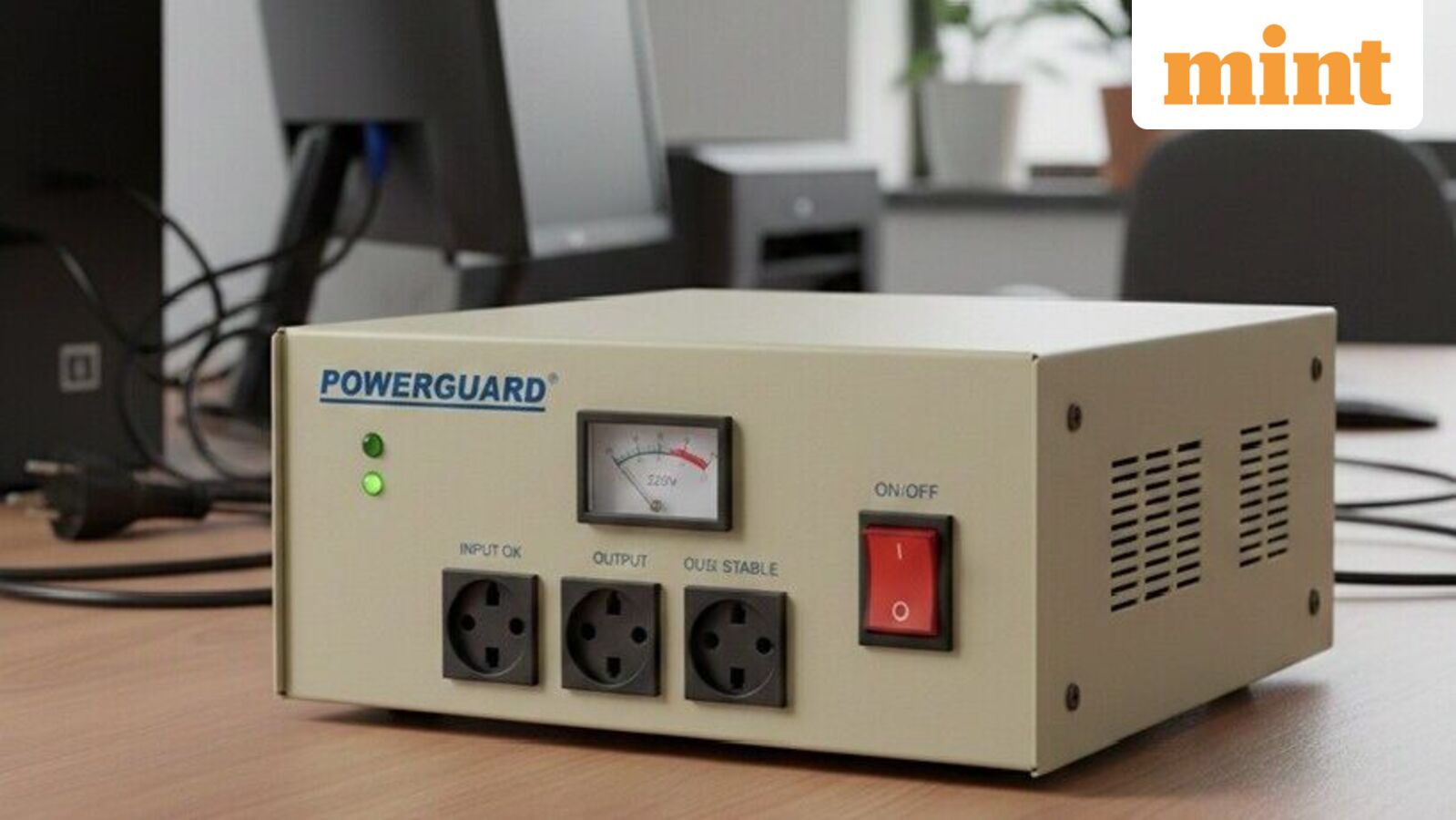
Many homes today rely on an inverter or UPS to keep essential appliances running during outages. These systems switch to battery mode once the mains supply fails, keeping lights, fans and basic appliances powered. During normal supply, the inverter simply passes incoming voltage to your wiring without regulating its stability. This means the electricity that flows into your home still carries the same amount of fluctuation, rise or fall from the main line. Most inverters and UPS units are designed for backup power, not active voltage correction. Their role is continuity, not protection. So even if you have a high-quality inverter installed, it does not protect your devices from sudden surges that occur while the mains is still active. Many users assume that the output of an inverter is always stable. Stability is true only when the inverter works in battery mode. During regular mains feed, the inverter behaves like a gateway that does not smooth the voltage, unless it includes advanced built-in features, which are still limited. This is why you may face flickering lights, display freezes on devices, or sudden device resets even with an inverter at home. Why stabilizers still matter for sensitive devices A voltage stabilizer works with one purpose: to keep the voltage steady before the power reaches your device. It measures incoming voltage and corrects it to a safe range, boosting it when the supply drops and cutting it when the supply rises too high. Devices with digital components, such as AC converters, smart TVs, refrigerators with electronic panels and washing machines with sensor-driven systems, react immediately to even small voltage shifts. If the shift goes beyond their tolerance, components can heat up, freeze or fail over time. A stabilizer acts like a shield by taking the initial hit of the fluctuation and ensuring that the device receives a consistent output. Although many modern models come with built-in surge protection, this protection only covers a limited variation. Extreme drops or spikes still run the risk of slipping through and damaging components such as compressors, circuits, backlight drivers and power supply modules. This is why brands still recommend using external stabilizers for certain categories, even though the devices include internal safety. Finding the right balance for your home The need for a stabilizer depends largely on the nature of your local power supply and the type of appliances installed. If your area experiences frequent dips, spikes or low voltage phases, it is not enough to rely only on an inverter, because the inverter does not filter the incoming voltage during normal supply. Sensitive devices continue to face risk until the inverter switches to battery mode. A stabilizer fills this gap by protecting them during everyday fluctuations. This becomes even more important for compressor-driven devices, as compressors require a stable voltage to maintain compression cycles. Hard nails can increase load on compressors, shorten life and cause early failure. Similarly, large-screen TVs and 4K panels contain backlight systems and processors that are extremely sensitive to unstable current. A stabilizer ensures stable output at all times, reducing stress on the panel and its internal circuits. When setting up your home, it is safe to connect a stabilizer to appliances that carry a higher load or contain delicate electronics. The inverter ensures continuity in power outages, while the stabilizer ensures constant voltage during daily use. The two do not replace each other. Instead, they work side by side to protect your devices. A home that uses both is better protected than a home that relies on one alone. Many households with premium appliances prefer to use stabilizers, even with new generation inverters, because they extend appliance life, maintain performance and reduce repair expenses. An inverter or UPS ensures power backup, but it does not guarantee protection against fluctuations during normal supply. A stabilizer keeps the voltage within a safe range, especially for devices that depend on sensitive electronic components. When both systems work together, your home gets reliable backup and stronger protection. So if your area sees variable voltage or you own premium appliances, using a stabilizer remains a smart decision, even if an inverter or UPS is already installed. When setting up your home, it is safe to connect a stabilizer to appliances that carry a higher load or contain delicate electronics. The inverter ensures continuity in power outages, while the stabilizer ensures constant voltage during daily use. The two do not replace each other. Instead, they work side by side to protect your devices. A home that uses both is better protected than a home that relies on one alone. Many households with premium appliances prefer to use stabilizers, even with new generation inverters, because they extend appliance life, maintain performance and reduce repair expenses. An inverter or UPS ensures power backup, but it does not guarantee protection against fluctuations during normal supply. A stabilizer keeps the voltage within a safe range, especially for devices that depend on sensitive electronic components. When both systems work together, your home gets reliable backup and stronger protection. So if your area sees variable voltage or you own premium appliances, using a stabilizer remains a smart decision, even if an inverter or UPS is already installed.