These prosthetics designers harness AI to help India’s amputees

[ad_1]
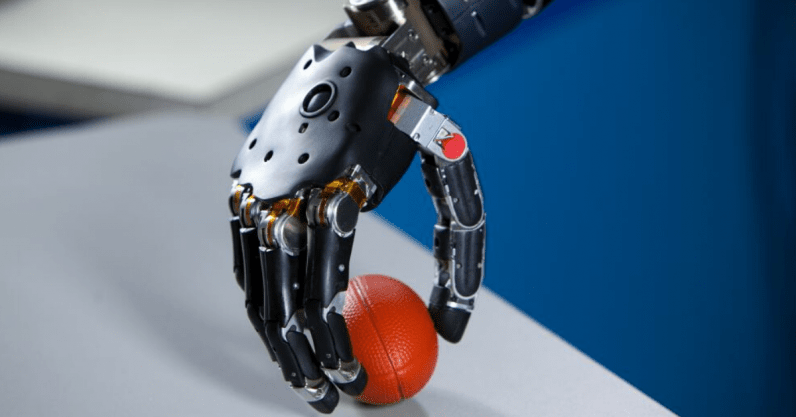
“With amputations being reported each day, India’s huge rural hinterland is corresponding to a warzone,” says Abhit Kumar, who makes sensible, inexpensive prosthetic gadgets designed to get amputees again into the workforce. Greater than two thirds of India’s 1.three billion inhabitants dwell in low-income rural areas, the place accidents leading to lack of limbs often happen from utilizing unsafe agricultural equipment, engaged on rail and street building, or because of snakebites.
In line with estimates, India has greater than half one million amputees, with tens of 1000’s added to the amputee inhabitants yearly. And rehabilitation assist from the federal government is negligible because of an overwhelmingly giant casual sector. After noticing that synthetic limbs or assistive gadgets obtainable in India have been costly, apart from being too heavy or too fragile to be of any sensible use, Kumar sensed what he calls a “gaping gap within the prosthetic market” and set about filling it with a startup referred to as Social {Hardware}.
Kumar, an engineer with a background within the biomedical and robotics discipline, teamed up with Cameron Norris, who works with open-source {hardware} within the UK, to check drawbacks in current prosthetic gadgets and provide you with options that would assist the typical low-income rural Indian for whom imported prosthetics may very well be price six months’ wages.
Immediately the group, which started work in 2016, noticed the necessity for a brand new method to upper-limb prosthesis design and got here up with the ‘Avocado’, a wrist connector able to drastically enhancing the general efficiency of current synthetic prosthetic gadgets. Named after the fruit for its form, the Avocado Wrist Connector is inexpensive and may be fitted to any higher limb prosthesis costing between 11,000 and 150,000 Indian rupees (US$154–$2,094) with out drastically growing the general worth of the product.
“The Avocado allowed me to get again to a near-normal existence,” says Subojeet Bhattacharya, a graphic designer primarily based in Bangalore, who misplaced each his arms following unintentional electrocution virtually 20 years in the past. “The prosthetic gadgets I attempted out by no means gave me any satisfaction as they didn’t have a correct grip or the suitable sensitivity, or else they have been heavy,” he tells SciDev.Internet.
“I needed one thing that will enable me to assist my spouse with extraordinary actions corresponding to gardening or slicing greens and that needed to wait until the Avocado wrist connector got here alongside,” says Bhattacharya. “All I must do is join the suitable instruments to the Avocado relying on the exercise. As soon as locked in place I’ve the boldness to hold out heavy duties corresponding to ploughing or delicate chores in my work as a graphic designer.”
“We got down to create a wrist connector that was simple to suit, snug to make use of however was additionally sturdy and inexpensive for, say, a disabled farmer,” says Kumar. “We turned to AI and got here up with the Avocado, a small mechanical adapter and machine which might present an improve to the present consumer of a prosthesis whereas conserving battery life for a powered prosthetic hand.”
The Avocado mass manufacturable prototype weighed round 300 grams however utilizing generative design the group was in a position to pare down the mass and materials till it reached 100 grams, with no compromise on energy and articulation.
“AI-based software program permits you to improvise on design whereas factoring in stress on explicit objects. Moreover, AI affords design alternate options factoring in human and different inputs in order that we might create a manufacturable product with minimal time and expense,” Kumar says.
As soon as perfected and able to roll, the Avocado was built-in into the present prosthetics provide chain in India, which is basically made up by merchandise manufactured by the Synthetic Limbs Manufacturing Company of India (ALIMCO).
“We have now additionally partnered with rehabilitation centres throughout the nation to make the Avocado obtainable throughout the nation,” says Kumar. “For instance, we work with the Nevedac Prosthetic Centre in Chandigarh, joint-capital of the agricultural states of Punjab and Haryana, the place many farming accidents happen.”
In line with Chandigarh-based Devender Sharma, an agricultural economist and founding father of Kisan Ekta (Farmer’s Unity), an umbrella for 65 farmers’ organizations, the Avocado is a “boon for the 1,000-odd farmers that lose a limb every harvesting season to energy threshers alone in Punjab and Haryana states”.
Sharma says that energy threshers used within the two states are poorly designed with guide feeding methods that “pretty much as good as assure the lack of human limbs”. He additionally lays blame on the military of untrained farm labour that descend on the 2 states through the harvest season to work beneath inhuman circumstances that end in lack of focus.
“Lack of a limb just about seals the destiny of such staff, even when they get any compensation, and one thing just like the Avocado wrist connector can preserve them out of complete destitution and suicide or hunger,” Sharma tells SciDev.Internet.
Maybe greater than threshers it’s snakebites that the majority usually end in amputations, to stop the unfold of gangrene. “Throughout our surveys we met staff within the espresso estates, plantations and forests of South India who mentioned that snakebite was an important motive for the lack of limbs,” Kumar says.
“We have now partnered with six rehabilitation facilities within the north area, northwest area, south area and northeast area and every has its personal particular requirement for prosthetics and coaching on use them to the perfect benefit,” Kumar says.
A ‘clear lifesaver’
In collaboration with these facilities, amputees are enrolled through non-profit organizations to hold out a full analysis of accidents and necessities and as soon as the prosthetic is fitted the providers of physiotherapists are engaged and a coaching program formulated to swimsuit every particular person.
“At Social {Hardware} we offer amputees from rural communities with entry to the physiotherapy and coaching required to profit from a particularly designed prosthetic hand that can be utilized of their every day lives,” says Kumar. Every prosthesis is designed utilizing Autodesk Fusion 360 3D CAD software program, which makes it simple to organize a prototype that may be made with 3D printing.
“We acquire and analyze knowledge from the recipient affected person to make sure probably the most snug and applicable becoming is achieved. Farmers could search for performance whereas somebody working in an city setting could also be extra involved in an aesthetically made machine.”
Importantly for the beneficiaries, Social {Hardware} merchandise are free to the consumer as a result of the corporate follows a company non-profit mannequin, a variation of the business-to-business-to-consumer (B2B2C) mannequin, the place the non-profit middleman picks up the price. This can be a far cry from a scenario the place anybody needing a prosthetic hand might hope, at finest, for a crude “one-size matches all” machine that would trigger the wearer discomfort or ache and heavy out-of-pocket bills, says Sharma – “a transparent lifesaver in Indian circumstances.”
This text was initially revealed on SciDev.internet by Ranjit Devraj. You possibly can learn the unique piece right here.
[ad_2]
Supply hyperlink


