How birds drop ‘pointless’ genes may also help us perceive evolution

[ad_1]
People, the most recent tally suggests, have roughly 21,000 genes in our genome, the set of genetic data in an organism. However do we actually want each gene we now have? What if we misplaced three or 4? What if we misplaced 3,000 or 4,000? Might we nonetheless perform? People have variation of their genomes, however the total measurement doesn’t fluctuate dramatically amongst people, aside from sure genetic issues like Down’s syndrome, which is brought on by an additional copy of chromosome 21 and all of the genes that it carries.
Every gene in a genome supplies the code for a protein that impacts our lives, from the expansion of our hair to permitting us to digest sure meals. A lot of the genes discovered within the human genome are in all probability secure for now, however there are some organisms that, over time, have minimize down their genome to reside in varied habitats.
Scientists beforehand thought that each gene in an organism’s genome was important for survival as a result of people have little variation in our genome sizes from individual to individual. Nevertheless, research utilizing animals with smaller, streamlined genomes have confirmed this unfaithful.
What does it take to streamline a genome? Does the organism simply minimize genes over time and hope for the very best, or are there a sequence of processes that compensate for the lack of these genes? If researchers can perceive how a few of these small genomes work so effectively, we are able to higher perceive how human genomes perform as effectively. We, Amey Redkar, Alison Gerken, and Jessica Velez, are a staff of biologists with numerous backgrounds, all related to the Genetics Society of America. We’re keen on understanding how numerous genetic processes work in quite a lot of organisms and try to speak these thrilling details about genetics to a broad viewers.
Genome structural rearrangement by means of evolutionary processes
Genomes can change in quite a lot of methods. Modifications could be slight, involving only a single DNA constructing block, or large-scale, such because the duplication or loss of a big chunk of DNA. It’s even doable to lose whole gene pathways – teams of genes performing collectively. Giant losses in DNA over time are referred to as genome streamlining.
Each organism is customized to its surroundings, and a few have achieved this by means of the method of genome streamlining. Throughout this course of, the genome is rearranged because the species adapt to their surroundings. Genome streamlining allows organisms to thrive in difficult environments, akin to low-nutrient ocean websites, or adapt to distinctive evolutionary challenges, akin to these posed by flight.
Researchers discover these variations by finding out the streamlined genomes of particular species, referred to as “mannequin species,” to uncover what genetic materials is extreme and if there may be an optimum variety of genes wanted for an organism to outlive.
Birds and crops endure genome streamlining
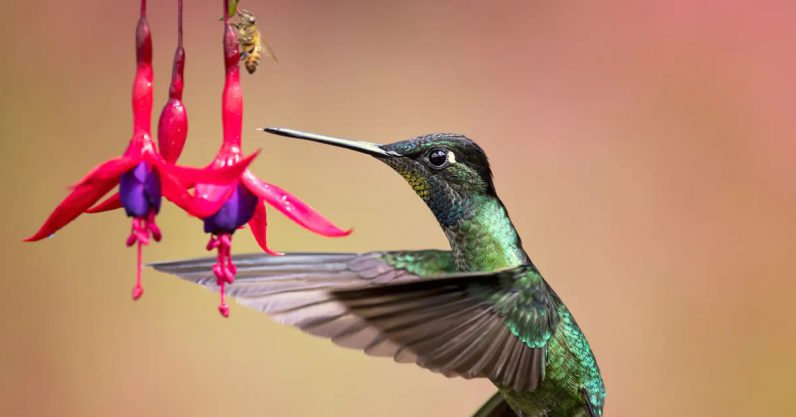
A placing instance of genome streamlining is seen in hummingbirds, through which the principle drivers of genome measurement variations are considered flight and metabolic calls for. These birds developed the power to fly in addition to a high-energy way of life, that are each mirrored of their genetic code. Hummingbirds possess the smallest and least variable genome inside fowl species at round 900,000,000 models of DNA. The genes that encode proteins are, on common, between 27 % and 50 % shorter than these in mammalian genomes. These variations arose by means of the method of genome streamlining. DNA and genes which didn’t actively contribute to hummingbirds residing at larger altitudes and having a particularly energetic, high-energy way of life have been misplaced by means of adaptive mutations.
Quick-moving birds are solely one of many extra energetically advanced species which have undergone genome streamlining. Within the plant kingdom, the tiny, rootless aquatic bladderwort plant, Utricularia gibba, captures insect prey in miniature traps utilizing vacuum suction. This plant is customized to a predatory way of life by means of an evolutionary collection of genes that permit the bladderwort to interrupt down advanced molecules utilizing particular enzymes and retain the plant’s structural integrity in water environments. Redundant, much less essential and pointless genes have been misplaced.
Excessive streamlining: The smallest genome
The earlier examples of decreased genome sizes elevate a elementary query: Simply how streamlined can a genome be? Because the genome of a species shrinks, scientists can discover what number of genes a species can lose earlier than an organism can now not survive.
One such organism utilized in these research, Prochlorococcus marinus, is a single-celled cyanobacterium residing within the open ocean. At 1,800,000 models of DNA, P. marinus is understood for having the smallest genome of any identified photosynthetic organism.
These cyanobacteria can now not create many important molecules wanted for survival. They’ve misplaced whole gene pathways used for the creation of amino acids, that are needed to construct proteins. Because of this, P. marinus is now not capable of survive in its pure surroundings with out the help of symbiotic or useful species that present the amino acids P. marinus wants. In a laboratory, researchers can’t develop P. marinus with out the presence of those helper species, or by instantly including the mandatory amino acids P. marinus wants.
Reliance upon one other species
Comparable symbiotic relationships exist within bugs. Some species of the bacterial pathogen Nardonella have undergone genome streamlining to genome measurement as small as 230,000 models of DNA, shedding all genes besides these needed for DNA synthesis and the gene pathway for manufacturing tyrosine, an amino acid for constructing proteins.
These micro organism derive virtually all of their metabolic necessities from the weevil through which they reside. The micro organism, in flip, present the ultimate constructing block for the pathway to ensure that the weevil to generate the amino acid tyrosine that builds a darker, more durable exoskeleton for the weevil which protects the insect from predators and from drying out. Because of this, Nardonella each depends on and supplies a profit to the host weevil in alternate for this reliance.
Like people, these species all have structured genetic data, however research in these animals, crops, and micro organism have revealed that not each gene was important to outlive of their environments. As researchers proceed to discover genome streamlining, we transfer nearer to understanding how genetic variations come up, how the lack of genetic data impacts the genomes of species, and simply how few genes a species will need to have to be able to survive in distinctive, difficult environments.
This text is republished from The Dialog by Jessica M. Velez, Graduate Analysis Assistant, College of Tennessee; Alison Gerken, Analysis Molecular Biologist, Kansas State College, and Amey Redkar, Postdoctoral Scientist (Marie Curie Fellow), Universidad de Córdoba below a Artistic Commons license. Learn the unique article.
[ad_2]
Supply hyperlink


