US Coast Guard pursues sanctioned oil tanker linked to Venezuela in Caribbean: Report

US Coast Guard pursues sanctioned oil tanker linked to Venezuela in Caribbean: Report

Another official was quoted as saying that the tanker was under sanctions, but added that it had not been boarded so far and that interceptions could take different forms – including by sailing or flying close to vessels of concern. Evana, an oil tanker, is docked at El Palito port in Puerto Cabello, Venezuela, Sunday, Dec. 21, 2025 (AP). The US Coast Guard is reportedly pursuing an oil tanker in international waters near Venezuela, in what would be the second such operation this weekend and the third in less than two weeks if successful. “The United States Coast Guard is actively searching for a sanctioned ‘dark navy’ vessel that is part of Venezuela’s illegal sanctions evasion,” a US official told Reuters. “It’s flying a false flag and under a judicial seizure order.” Another official was quoted as saying that the tanker was under sanctions, but added that it had not been boarded so far and that interceptions could take different forms – including by sailing or flying close to vessels of concern. Official sources did not give Reuters a specific location for the operation or the vessel being pursued. ‘Bella 1′ British maritime risk management group Vanguard, along with a US maritime security source, identified the vessel as Bella 1, ⁠a very large crude oil carrier that was added to the sanctions list by the US Treasury Department last year, which said the vessel had links to Iran. Bella 1 was empty as it approached Venezuela on Sunday, according to ‍TankerTrackers.com. In 2021, the vessel provided transportation for Venezuela’s oil to China, according to internal documents from state-owned oil company PDVSA. It also previously carried Iranian crude, according to the vessel monitoring service. Trump’s pressure campaign The White House did not immediately respond to a request for comment on Sunday, while US President Donald Trump last week announced a “blockade” of all oil tankers under sanctions entering and leaving Venezuela. Trump’s pressure campaign on Venezuelan President Nicolas Maduro has included an increased military presence in the region and more than two dozen military attacks on vessels in the Pacific and Caribbean near the South American nation. At least 100 people were killed in the attacks. The Skipper, a very large crude carrier and the first Venezuela-related vessel seized by the US on December 10, reached the Galveston Offshore Lightering Area near Houston on Sunday. Many large crudes cannot be transported through the Houston Ship Channel as the waterway is not deep enough, and usually transfer the oil on board to smaller tankers at GOLA. The first two oil tankers seized operated on the black market and supplied oil to countries under sanctions, Kevin Hassett, director of the White House’s National Economic Council, said in a television interview on Sunday. “And so I don’t think people here in the U.S. need to worry that the prices are going to go up because of these seizures on these ships,” Hassett said on CBS’ “Face the Nation” program. “There are only a few of them, and they were black market ships.” But analysts said the new seizures could push oil prices slightly higher when Asian trade resumes on Monday. “We may see prices rise modestly at the opening, considering market participants may see this as an escalation with more Venezuelan barrels at risk” because the tanker intercepted on Saturday was not under US sanctions, UBS analyst Giovanni Staunovo said. Venezuelan President Nicolas Maduro said Wednesday that the country’s oil trade will continue. But the new U.S. focus on oil tankers will raise geopolitical risks and likely hurt Venezuela’s oil revenues, analysts said. The effects could be felt quickly as Venezuela’s export volumes drop significantly and oil storage tanks fill faster, forcing the OPEC producer to cut output, said Francisco Monaldi, director of the Latin America Energy Program at Rice University’s Baker Institute. (With input from Reuters)

Why Shriram’s unique promoter structure was the ultimate bait for MUFG

Why Shriram’s unique promoter structure was the ultimate bait for MUFG

Copyright © HT Digital Streams Limited All rights reserved. Shriram Finance: MUFG may soon be in the driver’s seat Manish Joshi 3 min read Dec 22, 2025, 6:01 am. IST Within NBFCs, Shriram is emerging as a preferred choice as there is potential to increase its stake in the future to gain management control without dealing with a majority-holding promoter. (Pixabay) Summary The deal leverages Shriram’s unique ownership structure, which allows for potential future management control, and its superior return on assets compared to traditional banks. Shriram Finance Ltd stock, already trading at a lifetime high, rose another 3.7% to ₹902 on Friday after it announced that MUFG Bank Ltd will buy 471 million shares at ₹840 per share in the company through a preferential allotment. The deal gives MUFG a 20% stake. There are good reasons for MUFG to choose Shriram Finance over other banks and non-banking finance companies (NBFCs). Private banks in India are subject to a voting rights limit of 26% for a shareholder, while there is no such limit for NBFCs. In addition, banks also suffer from the disadvantage of meeting cash reserve ratios, statutory liquidity ratios and priority sector lending requirements, which lowers their return on assets (RoA). Sure, banks have the advantage of access to low-cost deposits, mainly Casa (current account savings account), but that hasn’t enabled them to beat the RoA of most leading NBFCs. Within NBFCs, Shriram is emerging as a preferred choice as there is potential to increase its stake in the future to gain management control without dealing with a promoter holding a majority stake. Take the case of Cholamandalam Investment and Finance Co., where the Murugappa group has a 49% stake. The promoter stake in Shriram is just 25%, most of which is owned by Shriram Capital, which in turn is owned by an employee trust. Key Takeaways Shriram’s low promoter stake makes it a prime target for MUFG to potentially seek management control in the future. The agreement highlights the appeal of the NBFC model over private banks as it avoids voting limits and CRR/SLR requirements. Tier 1 capital will jump from 20% to 36%, paving the way for a potential credit rating upgrade. MUFG enters Shriram at a significant discount compared to its closest counterpart, Cholamandalam. The interest savings from debt replacement are expected to offset the 25% equity dilution. For Shriram Finance’s shareholders, the transaction is positive. The capital infusion will strengthen the balance sheet with tier 1 capital rising from 20% to 36% based on the Q2FY26 data. It could also help secure a rating upgrade of agencies from the current level of AA+, which could lead to lower borrowing costs. For MUFG, the deal was struck at an attractive valuation. If the dividend discount model, which is similar to discounted cash flow (DCF) for non-lending companies, is used for the valuation of lending companies, it leads to more complications than DCF, as there is a problem in predicting the quantum and timing of dividend payout ratio. Shriram vs Cholamandalam Even if the entire book value of a lending company is in cash, book value cannot be seen in isolation and must be seen in conjunction with return on equity (ROE). Book value multiplied by RoE gives earnings per share (EPS). So it is effectively EPS that matters, with the price-to-earnings (P/E) ratio indicating the potential return on investment. Shriram and Cholamandalam are comparable peers with market capitalization at ₹1.7 trillion and ₹1.4 trillion respectively. Shriram quotes a p/e of 13x, according to Bloomberg consensus FY28 estimates, lower than Cholamandalam’s 17x. While it is true that Shriram’s earnings CAGR is likely to be lower at 18% over FY26-28, versus 25% for Cholamandalam, the differential growth rate is captured in the valuation till FY28. While the Bloomberg consensus estimate may not have factored in the impact of the deal, the equity dilution is unlikely to have a detrimental effect on valuation. Even if fresh equity funds worth ₹40,000 crore do not achieve an average return on loans at 18% and are used to replace the borrowed funds costing around 9% per annum (based on Q2FY26), interest savings should add around ₹2,700 crore at tax rate. FY27. The incremental profit after tax will be around 24% of the current FY27 consensus estimate. So the 25% share dilution can only have a marginal impact on the EPS. Get all the Business News, Market News, Breaking News Events and Latest News Updates on Live Mint. Download the Mint News app to get daily market updates. more topics #NBFCs #banks Read next story

Aavishkaar Group is trying to balance long-cycle carbon plays with faster-return bets

Aavishkaar Group is trying to balance long-cycle carbon plays with faster-return bets

Aavishkaar Group Founder Vineet Rai Summary Aavishkaar Group is recalibrating its climate investment strategy to balance long-term carbon sequestration projects with ‘quicker-return’ climate technology opportunities. Impact investor Aavishkaar Capital is increasingly seeking its long-cycle carbon bets with newer, faster-returning climate opportunities – areas where capital can convert more quickly, risks are easier to price, and returns don’t depend on 20-year biological curves. The shift comes even as the impact investor continues to build out its permanent capital vehicle for carbon sequestration, incorporated in 2024 as Aavishkaar Carbon, the firm’s founder Vineet Rai and Santosh Singh, managing director at Intellecap, the advisory arm of The Aavishkaar Group, told Mint in a joint interview. Aavishkaar Carbon was founded to invest in growing trees on Indian farms to promote carbon sequestration and monetize it through the carbon trading market. Sequestration is the process of capturing and storing carbon, and a permanent vehicle has unlimited tenure. The firm received $150 million in soft commitments from global companies, including oil majors and technology firms, interested in purchasing carbon credits generated from these projects to offset their emissions. Carbon credits trade between $15 and $100 in global markets, with ‘high-integrity’ credits commanding a premium. The strategy involves working with small landowners to increase tree cover and density, including planting native species such as salt and teak across 5,000–10,000 hectares. Aavishkaar is running two pilot projects in West Bengal and Jharkhand. Initially, small landowners are typically compensated through fixed payments, input support and intercropping income, with carbon revenue sharing kicking in later as sequestration increases. The firm had earlier explored launching a $350-500 million closed-end fund for carbon sequestration in 2022, Mint reported. While interest from investors, including development finance institutions, has been strong, the firm has moved away from the structure. Traditional funds typically have a 10-year term, which will force exits just as trees begin to sequester carbon at scale. Shift in capital structure In climate investing, opportunities broadly fall into three buckets. The first is decarbonisation, largely driven by corporate and industrial activity. The second is natural-resource-based bio-sequestration, such as forestry and land use projects. The third is technology-led carbon removal, where engineered solutions are used to extract carbon from the atmosphere. “The price difference is huge – a tree can earn you $10 per ton, while technology-based carbon removal can fetch $1,000 per ton, and buyers are willing to pay for that,” Rai said. Key Takeaways Aavishkaar has moved from a traditional 10-year closed-end fund model to a permanent capital vehicle to better align with 20-year tree growth cycles. The firm is adding ‘quick return’ bets such as Biochar and AWD to balance long-term agroforestry. There is a massive price difference in carbon removal; technology-led removal fetches up to $1,000/ton versus about $10/ton for nature-based sequestration. Aavishkaar is investigating carbon credit-linked bonds to attract private capital through familiar debt structures. The firm has secured $150 million in soft commitments from oil majors and technology firms for its carbon sequestration credits. The challenge with bio-sequestration is cost. These are 20-year projects, while most investors want to exit in 10–15 years. At 15 years, the tree is only halfway through its carbon sequestration cycle—precisely when yields begin to peak. A traditional fund structure forces liquidation only when the asset becomes valuable. “That’s why we decided to move away from a closed-end fund and set up a permanent capital vehicle, which allows us to hold the asset through its full biological and economic life cycle,” Rai said. At the same time, the climate ecosystem is already attracting capital to various mainstream sectors. Electric mobility and electric vehicle (EV) financing are closely linked to climate change, but transport itself is a mature and well-understood sector. That familiarity makes it easier for capital to flow when climate becomes an active theme because investors already understand the technology, risks and unit economics, Singh explained. Separately, the firm worked with financial institutions in Kenya to assess carbon-related risks and partnered with regulators to launch carbon credit-linked bonds, creating a path for private capital to enter carbon markets – a model it sees the potential to replicate in India as well. Shorter cycle bets Such bonds raise capital for climate projects, while linking investor returns to verified carbon credits. These credits can supplement bond repayments, affect coupon payments, or provide downside protection—allowing private investors to access carbon markets through a familiar bond structure rather than buying offsets outright. For its permanent capital vehicle, Aavishkaar is currently not raising fresh capital from the market. Instead, the firm is rebalancing its climate strategy by pairing long-term carbon bets with smaller, more digestible climate-tech investments that better align with investor timelines. While agroforestry remains part of the long-term thesis—often requiring 15–20 years to mature—the firm has expanded into shorter-cycle carbon interventions such as biochar and alternative wetting and drying (AWD) in agriculture. Biochar projects can generate outcomes over a much shorter horizon, while AWD interventions can show results within two to three years. The idea is to build a portfolio of carbon solutions with different time horizons, guided by clear impact principles, and test what can scale without locking up all capital in multi-decade projects, Singh explained. The shift reflects the scale and urgency of India’s climate finance needs. The country will need about $1.5 trillion for clean energy, transportation, biofuels and climate-resilient infrastructure by 2030 to meet its decarbonization goals, according to a Deloitte report this year. At the same time, climate technology investment is gaining momentum. Indian climate tech startups raised about $1.95 billion across 128 funding rounds between January and October 2025, a nearly 40% year-over-year increase, according to data from Tracxn. Policy winds are also taking shape: a draft Climate Finance Taxonomy released this year aims to channel capital to credible climate activities and combat greenwashing, in line with India’s net-zero by 2070 goal.

Shares to buy: Raja Venkatraman’s top choice for September 18

Stocks to buy: Raja Venkatraman’s top picks for December 22

Copyright © HT Digital Streams Limited All rights reserved. Raja Venkatraman, co-founder, NeoTrader, recommends three stocks for December 22. Summary Market expert Raja Venkatraman shares his top three stock picks to buy today, December 22. Discover his exclusive picks and analysis to inform your investment strategy. Indian Stock Markets: Bear forces have been unrelenting and the trends are unable to stage any recovery despite best intentions. With the trends still being challenged, the road ahead is fraught with uncertainty. Looking for some encouraging triggers. Three stocks to buy or sell as recommended by Raja Venkatraman of NeoTrader: PAYTM: Buy above ₹1340, stop ₹1300 target ₹1440 (multi-day) GLENMARK: Buy above ₹1995, stop ₹1970 target ₹2040 BH 1.40 hours above: Buy within ₹1995 stop ₹1420 target ₹1471 (intraday) Stock market summary Indian stock markets have a strong recovery on December 19 after three consecutive sessions of decline, driven by supportive global cues and domestic strength. The Sensex jumped nearly 600 points to an intraday high of 85,067, while the Nifty 50 reclaimed 25,993 on the upside. Finally, the Sensex closed 448 points, or 0.53%, higher at 84,929.36, while the Nifty 50 closed at 25,966.40, up 151 points or 0.58%. Gains were broad-based as the BSE Midcap and Smallcap indices rose more than a percent each. The BSE Midcap index gained 1.26% while the Smallcap index gained 1.25%. The rally was supported by cooling US inflation data, which showed consumer prices rose 2.7% year-on-year in November, down from 3% in September. This moderation revived expectations of further interest rate cuts by the US Federal Reserve, boosting investor sentiment worldwide. A stronger rupee also added to the optimism, supporting foreign inflows. However, analysts warned that the inflation data may have been distorted by the recent government shutdown, and urged investors to interpret the figures with caution. Trading Outlook In our previous issue, we mentioned that the bullish movements in Nifty still indicate a possibility of further advance. There were bouts of hesitation seen and the confluence of resistance unnerved even the best of minds. The build up to the geopolitical events did weaken the resolve to let the markets fall as we saw big profit taking ahead of the event. The rate hike by Japan and the continued selling by FII led to the trends being closely scrutinized. However, with the strong close seen on Friday, bulls have come back into the frame of mind. They could not stamp their authority until Friday. Mid and Small Caps thrived right through the week as the focus on Futures remained muted. On the overseas front, the stimulus initiative undertaken by the Federal Reserve is dealing with the tepid growth in the United States and does not foresee an increase in interest rates for the near term. So we shouldn’t see much volatility in the currency for this month. With no event triggers to influence the global outlook, we must look inward for some clues to give direction to the trend. Post the RBI policy where the governor offered a rate cut, nothing moved except in the metal space. With the global markets in a pensive stage, there must be a stronger reason for him to initiate that move. An eventful week is likely to limit the strong bullish undercurrent seen in the markets today. While it is a given that we should stay on the positive side, it would be best to discuss gains as we see them. The hourly charts of Nifty show that the rally seen since Thursday has seen a strong surge in the latter half of the day into the medina line which has played quite well as a support and resistance line producing a strong set of recovery. Hence, a long can be initiated in Nifty if it moves above 26050 on Monday or on dips near 25900. The stop loss on this trade could be below 25800 for a rise to 26200. View full image (TradingView) Three stocks to trade recommended by NeoTrader’s Raja Venkatraman PAY ₹3 price PAY 3. it is recommended: Paytm (One97 Communications Ltd) is India’s leading digital payments and financial technology company, offering services such as mobile payments (UPI, QR codes, Soundbox), bill payments, e-commerce, travel booking and financial products (loans, insurance, wealth management) for consumers and merchants. This stock is consolidating for a while until Friday the strong and robust volume that emerged helped the rally. With the prices climbing higher and the revival of momentum again we can look at the possibility of more upside. View to buy. Key Metrics: 52-week high: ₹1,381.75, volume: 7.31 million. Technical Analysis: Support at ₹1250, resistance at ₹1500. Risk factors: Regulatory scrutiny and operational challenges for financial sustainability and market competition. Buy: Above ₹1340. Stop loss: ₹ 1,300. Target price: ₹ 1,440 (2 months) GLENMARK (current market price ₹ 2,646.70) Why it is recommended: Glenmark Pharmaceuticals Ltd heavy on dermatology, respiratory and oncology. After a sharp decline, the prices have reached a strong set of valuation support and are seen to be recovering again. Also, the RSI is seen moving higher with prices going out of the cloud on the daily charts, highlighting that there is a strong possibility of moving higher. Key Metrics: P/E: 368.15, 52-Week High: ₹2286.15, Volume: 527.85K. Technical Analysis: Support at ₹1920, resistance at ₹2100. Risk Factors: Intense generic competition and pricing pressure, significant USFDA regulatory risks (plant warnings/warnings), challenges in its new drug R&D pipeline (high costs/uncertainty), financial risks such as debt and working capital management, evolving landscapes in India (commercial generics). Buy: above R1995. Stop loss: ₹1970. get price: ₹ 2040 BHARAT FORGE (current market price ₹ 1,439.90) Why it is recommended: Bharat Forge Ltd (BFL) is a global engineering leader specializing in high performance, safety critical components for automotive, aerospace, defense, railways, marine and energy sectors itself as a key player in India as an industrial growth player. A strong long-bodied bullish candle seen on Friday fueled some strong bullish sentiments. With the RSI taking support at the neutral zone and rising, we can look at possibility of more upside in the coming days. A dip in the cloud region and a rebound bodes well for a revival. Consider going long. Key Metrics: P/E: 51.36, 52 Week High: ₹1460.70, Volume: 503.96K. Technical Analysis: Support at ₹1390, resistance at ₹1550. Risk factors: Slow global auto market recovery, slow defense and EV segment scale and geopolitical and macroeconomic factors. Buy: above R1441. Stop Loss: ₹ 1420. Target Price: ₹ 1471. Raja Venkatraman is Co-Founder, NeoTrader. Its Sebi registered research analyst registration no. is INH000016223. Investments in securities are subject to market risks. Read all the related documents carefully before investing. Registration granted by Sebi and certification from NISM in no way guarantees performance of the intermediary or provides any assurance of returns to investors. Disclaimer: The views and recommendations given in this article are those of individual analysts. It does not represent the views of Munt. We advise investors to check with certified experts before making any investment decisions. Get all the Business News, Market News, Breaking News Events and Latest News Updates on Live Mint. Download the Mint News app to get daily market updates. more topics #markets premium # stocks to buy # stock recommendations # stock recommendation # Stock Markets Read next story

Three stocks to buy today: Ankush Bajaj’s top recommendations for December 8

Three stocks to buy today: Ankush Bajaj’s top recommendations for December 22

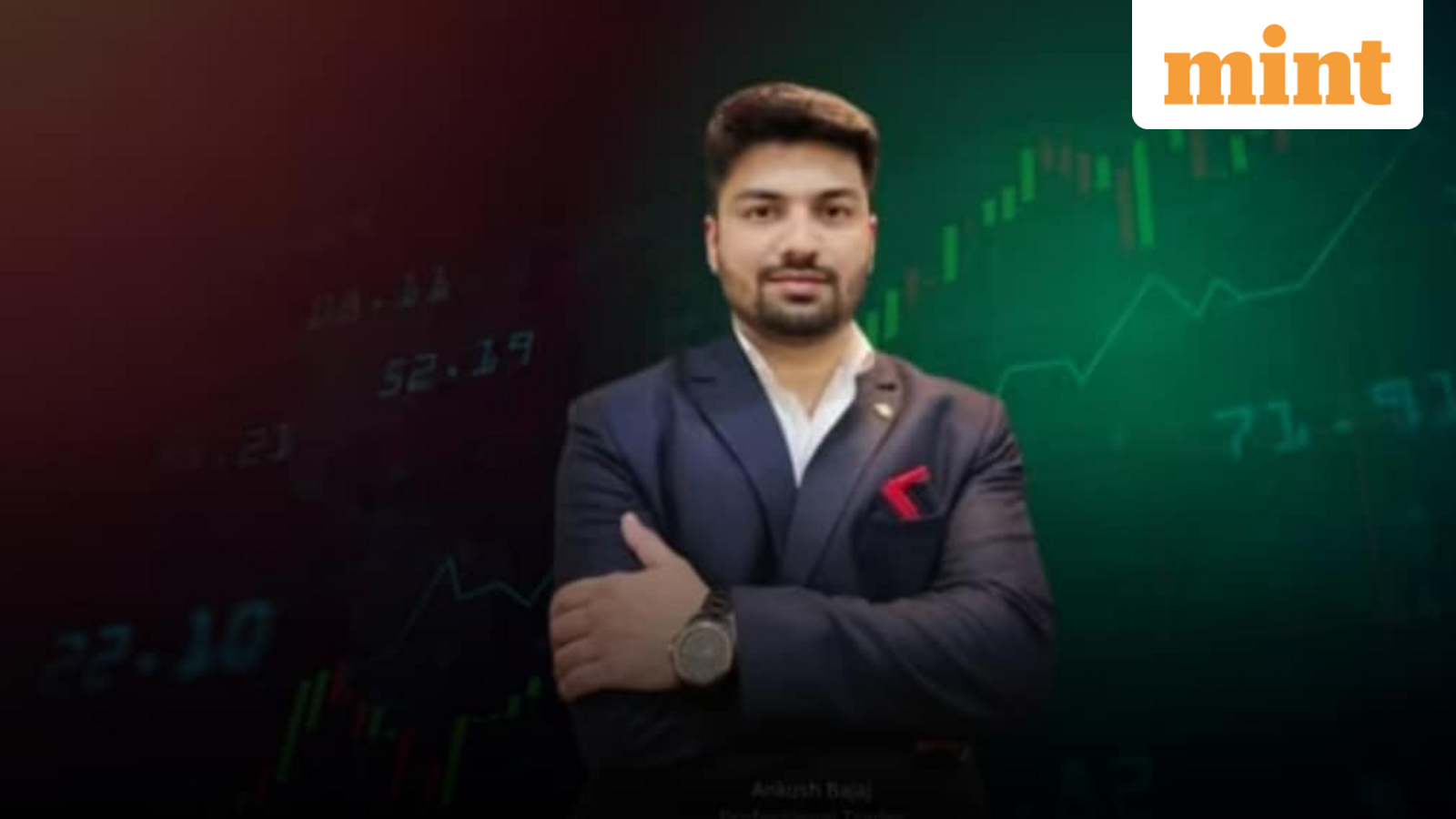
Copyright © HT Digital Streams Limited All rights reserved. Ankush Bajaj 6 min read 22 Dec 2025, 06:00 IST Ankush Bajaj recommends three stocks for 22 Dec. Summary Market expert Ankush Bajaj recommends three stocks to buy on December 22. Discover his exclusive picks and analysis to inform your investment strategy. Stock Market Summary: Indian stock market saw solid buying interest on Friday, December 19, even as the Bank of Japan (BoJ) raised interest rates and signaled that there could be more hikes in the near future. The Sensex jumped nearly 600 points to an intraday high of 85,067, while the Nifty 50 reclaimed 25,993 on the upside. Finally, the Sensex closed 448 points, or 0.53%, higher at 84,929.36, while the Nifty 50 closed at 25,966.40, up 151 points or 0.58%. Gains were broad-based as the BSE Midcap and Smallcap indices rose more than a percent each. The BSE Midcap index gained 1.26% while the Smallcap index gained 1.25%. Top three stock picks by Ankush Bajaj for December 22 Buy: Infosys Ltd. Why it is recommended: Infosys is showing strong bullish momentum with a well-defined trend on the daily chart. The RSI at 79 highlights strong buying power and continued upward momentum, while the MACD at +25 confirms a strong positive crossover, indicating the continuation of the ongoing uptrend. The ADX at 30 reflects a well-established and strengthening trend, suggesting that the stock remains in a high-momentum phase. Price action remains supportive above key short-term levels, reinforcing bullish sentiment. Key metrics: RSI (14-day): 79 — strong bullish momentum MACD (12.26): +25 — strong positive crossover ADX (14): 30 — strong and established trend Technical View: As long as Infosys holds above ₹1,625, the bullish structure remains intact, with room for a further move to ₹1.6. Risk Factors: Short-term overbought conditions, global IT spending trends and volatility in currency movements. Buy at: ₹1,638.70 Target price: ₹1,665 Stop loss: ₹1,625 Buy: Tata Consultancy Services (TCS) Why it is recommended: TCS continues to trade with a strong bullish bias, supported by robust trend indicators. The daily RSI at 68 indicates healthy upside momentum without entering extreme overbought territory. The MACD at +41 indicates a powerful positive crossover, reinforcing the strength of the ongoing rally. The ADX at 33 confirms a strong and mature trend, indicating continued institutional participation. Price action above key support levels keeps the outlook constructive. Key Metrics: RSI (14-day): 68 — healthy bullish momentum MACD (12.26): +41 — strong positive crossover ADX (14): 33 — strong trend strength Technical View: Sustainment above ₹3,266 will keep momentum positive, with upside potential to ₹3,315 in the near term. Risk Factors: Global technology sentiment, client spending cycles and broader market volatility. Buy at: ₹3,282 Target price: ₹3,315 Stop loss: ₹3,266 Buy: Bharat Electronics Ltd (BEL) Why it is recommended: BEL is currently in a consolidation phase, but signs of a developing trend are emerging. The daily RSI at 43 indicates neutral momentum, suggesting limited downside at current levels. While the MACD remains slightly negative at -7, it is flattening, pointing to a possible bullish reversal. The ADX at 31 reflects strong trend strength, implying that a directional move may emerge once momentum improves. Key Indicators: RSI (14-day): 43 – neutral, base building phase MACD (12.26): -7 – negative but stabilizing ADX (14): 31 – strong trend potential Technical View: A sustained move above the stop loss level will support a recovery, with upside potential towards ₹403 once momentum turns positive. Risk Factors: Slowdown in order inflows, execution timelines and broader PSU sector sentiment. Buy at: Current Market Levels Target Price: ₹403 Stop Loss: ₹387 Market Cover | December 19 On Friday, December 19, the Indian stock market rebounded strongly with benchmark indices ending the session significantly higher. The Nifty 50 climbed 150.85 points or 0.58% to close at 25,966.40, while the Sensex jumped 447.55 points or 0.53% to settle at 84,929.36, snapping a four-day losing streak and reflecting broad-based buying interest. Bank stocks recovered from previous weakness, with the Bank Nifty also advancing in line with the positive market momentum, indicating a modest stabilization in the financial space following recent consolidation. (Sector index data pointed broadly higher on the day). Sectoral action was broadly positive as investors took part in a broad rally spurred by supportive global cues. IT and financial stocks led the advance, while other cyclical segments also participated in the upward movement. Exact sector movements (eg Realty, Metals, Energy, Auto, PSE) showed mixed strength, with several indices ending in the green, highlighting a more constructive breadth compared to the previous session. Top performers: Shriram Finance outperformed the broader market, rising 3.71%, while Bharat Electronics (BEL) followed with a solid gain of 2.45%. Power Grid continued its steady upward movement, advancing 2.13%, while Tata Motors added 1.98%. Eicher Motors ended the session higher by 1.55%, rounding off the list of top gainers. Worst Performers: On the downside, HCL Technologies led the losses, falling 1.14%. Hindalco Industries fell 0.55%, while Kotak Mahindra Bank fell 0.24% lower. JSW Steel also fell 0.24%, and ICICI Bank ended marginally lower, down 0.20%. View Full Image (TradingView) Nifty closed at 25,966.40, gaining 150.85 points or 0.58%, reflecting a steady recovery after recent consolidation. On the daily time frame, the index is trading above its 40 DEMA at 25.839 and key trend averages such as the 20 HMA at 25.903 and 40 HEMA at 25.867, indicating an improvement in the underlying strength. However, it remains slightly below the 20 DMA placed at 25,993, suggesting the presence of immediate resistance near the 26,000 zone. The daily RSI at 52 indicates a neutral-to-positive momentum, showing room for further upside without overbought conditions, while the daily MACD at 13, which remains in positive territory, supports the continuation of the current uptrend. View Full Image (TradingView) On the hourly chart, momentum appears to be stronger as Nifty continues to trade comfortably above its short-term averages. The hourly RSI at 59 reflects healthy bullish momentum, and the hourly MACD at 17 further confirms strong intraday strength, indicating buyers remain in control on dips. As long as the index holds above the 25,900–25,920 support zone, the short-term structure is likely to remain positive. From the derivative perspective, the options data clearly supports a bullish bias. Total Put Open Interest at 16.60 crore remains higher than Call Open Interest at 15.08 crore, resulting in a PCR of 1.13, reflecting stronger put writing and confidence in downside support. The change in open interest further reinforces the bullish view, with Put OI addition of 5.59 crore and a reduction in Call OI by 1.19 crore, resulting in a positive PE–CE OI change differential of 6.77 crore. The 25,900 strike has emerged as a strong support zone with maximum put OI and OI addition, while 26,000 remains the immediate resistance based on maximum call OI, followed by 26,200 where new call script is visible. The relatively low India VIX at 6.94 indicates a stable market environment with limited short-term volatility. Overall, the technical structure across daily and hourly charts, combined with supportive options data, suggests a mild-to-positive bullish outlook for Nifty. The index is likely to maintain a buy-on-dip approach as long as it maintains above 25,900, while a decisive breakout above 26,000 could pave the way for further gains in the coming sessions. Ankush Bajaj is a Sebi Registered Research Analyst. Its registration number is INH000010441. Investments in securities are subject to market risks. Read all the related documents carefully before investing. Registration granted by Sebi and certification from NISM in no way guarantees performance of the intermediary or provides any assurance of returns to investors. Disclaimer: The views and recommendations given in this article are those of individual analysts. It does not represent the views of Munt. We advise investors to check with certified experts before making any investment decisions. Get all the Business News, Market News, Breaking News Events and Latest News Updates on Live Mint. Download the Mint News app to get daily market updates. more topics #Nifty 50 #banknifty #sensex #Coforge Ltd #stocks to buy #stock recommendations Read next story


Rivals list, but Kotak resists: The case against subsidiary IPOs

Rivals list, but Kotak resists: The case against subsidiary IPOs

Ashok Vaswani, Managing Director and Chief Executive Officer, Kotak Mahindra Bank. Summary Kotak Mahindra Bank is the holding company that fully owns all 20 subsidiaries of the financial services group. But unlike peers like ICICI Bank and HDFC, Kotak CEO Ashok Vaswani sees little value in going public with subsidiaries. That’s why Kotak Mahindra Bank Ltd currently sees little value in listing its subsidiaries and selling a stake to “foreigners” and will instead focus on building an enduring institution, Chief Executive Officer Ashok Vaswani said, even as peers floated their units during India’s record IPO boom. History shows that when a private or public sector bank has sold a significant stake, they have brought overseas buyers, Vaswani, who will complete two years at the helm of India’s fourth-largest private lender by assets in January, told Mint in an interview. “We’re not here for a day in the sun or a quarter in the sun; we’re here to build a lasting, lasting, lasting franchise,” Vaswani said. “The foreigner brought no talent, the foreigner brought no brand. Yet the foreigner, 10 years later, made out like a bandit. What is the value that the person who sold obtained?” Kotak Mahindra Bank is the holding company that fully owns all 20 subsidiaries of the financial services group. It also has three associated companies: Infina Finance Pvt Ltd (49.99% stake), Phoenix ARC Pvt Ltd (49.9%), and Zurich Kotak General Insurance Company (India) Ltd. While Vaswani is not keen on bringing in a foreign partner in its subsidiaries, Kotak sold 70% in its general insurance subsidiary to Zurich Insurance 5.20 Company in June 5.20 crore and now owns the remaining 30%. “In our case, our businesses are doing well, and we are gaining momentum every year,” Vaswani said. “You get built-in value creation in Kotak, and why would I overlook that built-in value creation? Especially when my goal is not to just book profits on one particular day.” Rival lender ICICI Bank Ltd recently listed its asset management company, a joint venture with Prudential Plc, in a $1.2-billion IPO. HDFC Bank Ltd unveiled its non-bank lending arm HDB Financial Services in July, while State Bank of India (SBI) announced plans to list SBI Funds Management, its joint venture with French asset manager Amundi. The domestic market has seen a surge in listings this year as companies benefited from demand for shares from investors, led by mutual funds. According to a Dec. 9 Bloomberg report, India’s initial public offerings hit a record ₹1.77 trillion, surpassing the 2024 high of ₹1.73 trillion. As a financial conglomerate, Vaswani said the Kotak Group can tap into all customer profiles, be it in loans, insurance, capital markets or investments. “I like to think of Kotak as an airplane flying on a couple of engines.” “There’s of course the banking engine or, let’s say, the lending engine. There’s the insurance engine, there’s the asset management engine and the capital markets. And if I can keep all this kind of flying, it gives a lot of assurance that if one of the engines explodes, then the other engines still keep the plane flying and rising,” says Vaswani. Beyond its current subsidiaries, Vaswani said the bank is exploring “every single inorganic opportunity”, but it has to make strategic sense and meet valuation expectations. While the bank has made acquisitions in the past, it has made a few purchases in the past two years. The bank bought microfinance company Sonata Finance in March 2024 for ₹537 crore. Earlier in January, it bought Standard Chartered Bank’s ₹3,330 crore personal loan portfolio. Kotak Mahindra Bank is also considered a competitor to IDBI Bank. Without commenting on IDBI Bank, Vaswani said an inorganic opportunity should give Kotak a large number of customers, provide a lot of deposits or add to the portfolio, among other things. “Strategically, if it’s a tick and valuation is a tick, then we’ll try to do the deal,” he said. “That’s why we really like these portfolio acquisitions, like the Standard Chartered personal loan book or Sonata.” Analysts are not too keen on Kotak stepping into the IDBI deal. In an email accompanying his note to clients, Suresh Ganapathy, managing director and head of financial services research, Macquarie Capital, said: “I really hope they stay away from this IDBI buyout as in our view it is quite negative if they merge or take a 40-50% stake and it could be a downgrade event of the bank which is currently maintaining a high capital ratio. Depresses its return on equity (ROE) – a measure of profitability. Kotak Mahindra Bank has a capital adequacy or risk buffer of 20 basis points (bps) over a year ago. The bank’s RoE shrank to 10.65% a year ago. Kotak Mahindra Bank is India’s fourth largest private lender by assets, behind HDFC Bank, ICICI Bank and Axis Bank. “Overall, excess capital is just a good thing because it enables you to weather any kind of downside, any thunderstorms that occur on the downside. It allows you to take advantage of opportunities on the upside,” Vaswani said. He added that the ROE has been partially suppressed by credit costs, and as those costs improve, so will the ROE. “As we automate and digitize, you’ll see the cost-to-asset ratio decrease, which should also improve ROEs,” Vaswani said. The cost-to-asset ratio is expenses as a percentage of total assets and measures the operating efficiency of a bank.

ASN sacked after viral allegation of fraud, PKS recalls

ASN sacked after viral allegation of fraud, PKS recalls

Jakarta – Two ASN school supervisors at the elementary and middle school level who were suspected of having an extramarital affair have been fired. Member of Commission II of the DPR, who is also the chairman of the Election and Regional Election Winning Division of the DPP PKS, Mardani Ali Sera, asked the Ministry of State Apparatus Empowerment and Bureaucratic Reform (PAN-RB) to remind ASN of ethics and morals. “The Ministry of PAN-RB and technical ministries must continue to remind the ethics and morals of all ASN as pillars of the state’s presence in society,” Mardani told journalists on Monday (21/12/2025). Mardani said this incident illustrates the importance of maintaining a healthy atmosphere in the RT and RW environment. Social relations between neighbors, he said, can detect deviations from norms early. Scroll to continue content “If friendly social relations are built, the phenomenon of social disease can be immediately detected and solved,” he said. The Bogor Regency government is known to have fired 2 ASN school supervisors at primary and middle school levels who were suspected of having an extramarital affair. Both were deemed to have committed serious breaches of the ASN’s code of ethics leading to dismissal sanctions. “The disciplinary punishment imposed was the worst, namely honorable dismissal without his own request, in accordance with government regulation number 94 of 2021 regarding civil servants’ discipline,” said Bogor Regency regional secretary, Ajat Rochmat Jatnika, as reported by Antara, Sunday (21/12/2025). These sanctions were imposed following complaints from the public about allegations of cohabitation outside of marriage or cohabitation. This incident arose after the video of the two raids was circulated on social media. The raid was carried out by the child of one of the ASN who did not accept that his parents were suspected of having an affair. Ajat explained that the Bogor Regency government followed up on the complaint through an inspection mechanism in accordance with statutory provisions. According to him, the process of dealing with this case took quite a long time. The inspection begins within the Education Department, then continues with a special inspection team because suspected violations lead to serious penalties. Ajat said that the recommendation for disciplinary punishment was received from the National Public Service Agency (PSA) on December 10, 2025 and determined by a decision on December 11, 2025. Furthermore, the decision letter for disciplinary punishment was handed over to the two Bogor ASN individuals on December 15, 2025 to start the administrative period and from that moment appeal came into effect. “The person concerned is given 14 days to file an administrative appeal. If there is no appeal, the sentence will stand permanently,” he said. (isa/imk)

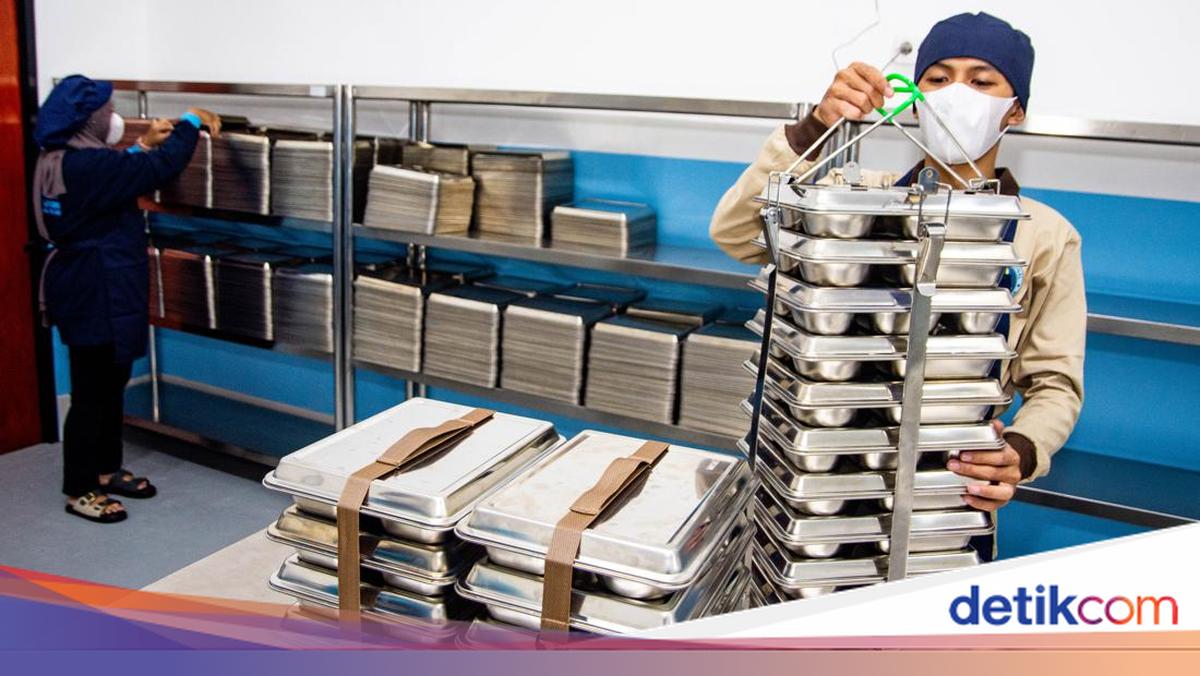
Nutritional values ​​rapid test and HACCP in MBG Kitchen Extraordinary breakthrough

4 things about MBG that still run even though school students are on vacation

Jakarta – The odd semester break for December 2025 has been implemented by a number of schools in Indonesia. If schools are closed, what will happen to the Free Nutritious Meals (MFM) that students received? Dadan Hindayana, head of the National Food Agency (BGN), opened his voice about the MBG program during the holidays. He said even though it was a holiday, the implementation of this program is still going as it should. BGN said it has prepared a number of alternatives for students to obtain the MBG. This program is said to continue to improve children’s nutrition even though schools are closed until early January 2026. Scroll TO CONTINUE CONTENT Rounded up by detikcom, here are a number of things you need to know about MBG still running during the holidays. 1. MBG for pregnant women runs as usual. Dadan, head of BGN, said the MBG program for pregnant women, breastfeeding mothers and toddlers is still running as usual. MBG distribution for this category is not affected and continues as usual. “For pregnant women, breastfeeding mothers and toddlers as usual,” Dadan said on confirmation on Sunday (21/12/2025). Pregnant women, breastfeeding mothers and children under five are categorized as group 3B or parties entitled to receive MBG. It is known that this MBG program has been running since January 2025 for almost a year. 2. Students can take MBG to school or SPPG. Head of BGN Dadan said that students can take MBG to school during the semester break. According to him, the Nutrition Fulfillment Service Unit (SPPG) will conduct an inventory of the number of children who are willing to take MBG. “For school children, each SPPG must carry out an inventory of how many and how often children are willing to go to school,” said Dadan. They also allow students to take SPPG. Nanik Sudaryati Deyang, deputy principal of BGN, said parents of students are also allowed to take the MBG menu to school. “The parents can take it, it is already placed in a bag. In principle, we provide nutritious food to improve nutrition, so even if it is a holiday, we try to ensure that the children still get nutritional intake,” said Nanik. 3. MBG menu variations during holidays Dadan said that at the beginning of the school holidays, students will get ready-to-eat menus such as eggs, fruit, milk, shredded meat or beef jerky. This menu runs for a maximum of 4 days. “At the beginning of the holiday, we are given ready-made food for a maximum of 4 days with quality menus such as eggs, fruit, milk, shredded meat or beef jerky,” said Dadan. Meanwhile, Deputy Head of BGN Nanik said that the MBG menu could be adjusted to include dry ingredients during the holidays. He said the menu prepared consisted of fruit, milk, bread and salted eggs. “MBG is made in dry (unprocessed) ingredients, for example fruits, milk, bread (made by MSMEs), and eggs. To make the eggs last longer, use salted eggs. The mechanism can be delivered to the school within two or three days, then the students who want to take it are registered. Get it from the school,” Nanik said. 4. BGN prepares delivery option to student homes. Head of BGN, Dadan Hindayana, responds to parents’ complaints that they have to take food to school. They said they are preparing a delivery system option or delivering the MBG menu to each student’s home. “For the rest of the day, if students are willing to come to school, they will be distributed to school, if not, we have to start taking up delivery mechanisms at homes or pick them up at SPPG,” he said. “We are currently designing a delivery system after 4 holidays,” he added. Nanik, deputy principal of BGN, said the MBG program during holidays depends on the agreement between the school and students. BGN, it was said, did not force distribution during school holidays. “For school children, it depends on the agreement with the school, if the student wants to take it at school, we will give it, if they don’t want it, we won’t give it. So those at school won’t force it,” Nanik said. (dwr/dwr)

The behavior of the regent of Bekasi and his father asked for IDR 9.5 billion even though there was no project yet

My father used to be proud that the regent of Bekasi was happy to help, but now he is compact with the KPK’s OTT

Jakarta – The corruption case that entangled Bekasi regent Ade Kuswara Kunang has undoubtedly become a public topic of conversation because it also involved his father, HM Kunang. This son and father were caught together in the Corruption Eradication Committee’s arrest operation (OTT) after they were suspected of carrying out project bribes. However, it seems that his father, HM Kunang, once made Ade Kuswara proud during Ade’s early days leading Bekasi Regency. HM Kunang said, Ade was dedicated to helping parents. Scroll TO CONTINUE CONTENT Quoted from the official Bekasi Regency Government website, Monday (22/12/2025), it was transmitted by HM Kunang on February 20. He hopes that his son’s leadership can bring positive change to the people of Bekasi Regency. “We are very proud. Since childhood, Ade has shown dedication to helping his parents and has a great sense of responsibility,” HM Kunang said after attending a plenary meeting at the Bekasi Regency DPRD building last Thursday (20/2). At that time, Ade Kuswara Kunang had just been officially appointed as Regent of Bekasi for the 2025-2030 period together with Deputy Regent Asep Surya Atmaja after winning the most votes in the 2024 Pilkada. Ade was previously a member of the Bekasi Regency DPRD. HM Kunang is also confident that his son will carry out his duties with full responsibility. He believes his son will be a reliable leader. “Ade always tries to give his best. We are sure he will be a reliable leader,” he said. Kompak Subjected to KPK OTT The KPK carried out a sting operation against Ade and Kunang on Thursday (18/12). The Corruption Eradication Commission (KPK) then named Ade and HM Kunang as suspects because they were suspected of receiving bonds or money given to someone to get a project worth IDR 9.5 billion. Asep Guntur Rahayu, Acting Deputy for Enforcement and Execution of the Corruption Eradication Committee, said that the project is planned to be carried out next year. “So after he was inaugurated at the end of last year, at the end of 2024, Brother ADK then established communication with Brother SRJ because SRJ is a contractor that usually executes projects in Bekasi Regency. After that, because there was no money for this, the projects that will be available in 2026 and beyond were communicated with Brother SRJ, although the project still often exists in itself as a project,” said. conference, Saturday (20/12). Ade and Kunang received the bond four times. Money is transferred through an intermediary. “Then the total mortgage given by SRJ to ADK and HMK reached IDR 9.5 billion, the money was given to intermediaries in 4 transfers,” he said. Both were charged with Article 12 a or Article 11 and Article 12B of the Corruption Act in conjunction with Article 55 paragraph (1) 1st of the Criminal Code and Article 5 paragraph (1) letters a or b or Article 13 of the Corruption Act in conjunction with Article 55 paragraph (1) 1st of the Criminal Code. Total assets IDR 79.1 billion Ade Kuswara, who is said to be the youngest regent in the history of Bekasi Regency, is recorded with assets of IDR 79.1 billion. Quoted from the official Bekasi Regency Government website, Sunday (21/12), Ade Kuswara was inaugurated as Regent of Bekasi in February 2025. At the time of his inauguration, Ade Kuswara was still 31 years and 6 months old. Ade is 4 months younger than his predecessor, Neneng Hasanah Yasin, who was appointed Regent of Bekasi at the age of 31 years and 10 months. Neneng was also arrested by the KPK in a sting operation in 2018 and was sentenced to 6 years in prison. Now Neneng is free from prison. In the LHKPN seen on the official KPK website, it is recorded that Ade has 31 pieces of land spread across Bekasi, Karawang and Cianjur. The total value is IDR 76.5 billion. Ade also has a Mitsubishi Pajero Sport Dakar that came from a prize worth IDR 400 million, an inherited Jeep Wrangler car of IDR 650 million and a Ford Mustang of his own that makes IDR 1.4 billion. Ade also has other movable assets of IDR 43 million and cash and cash equivalents of IDR 147.9 million. Ade has no debt. So, his total assets are IDR 79,168,051,653. (fca/fca)

December 22, 2025 Commemorate what? There is Mother’s Day and others

December 22, 2025 Commemorate what? There is Mother’s Day and others

Jakarta – There are a number of important days that will be celebrated on December 22, 2025. In Indonesia, this date is celebrated as Mother’s Day. Meanwhile, internationally, there is Forefathers’ Day in America, Mathematics Day in Indonesia and Unity Day in Zimbabwe. Quoting from the editorial notes of detikcom and National Today, here are the misc. Commemoration of Mother’s Day in Indonesia In 2025, Mother’s Day will enter its 97th year since it was first established. This year, the theme raised is “Empowered and Creative Women, Towards a Golden Indonesia 2045.” This theme emphasizes the importance of women’s independence and creativity as the main pillars of the nation’s progress. PAGE TO CONTINUE CONTENT The institution of Mother’s Day began with the First Indonesian Women’s Congress held on December 22, 1928 in Yogyakarta. This congress became an important milestone in the struggle of Indonesian women in national and state life. Forefathers’ Day in the United States In the United States, December 22 is celebrated as Forefathers’ Day. This warning relates to the history of the arrival of the Pilgrims or Pilgrims in America in the 17th century. Ancestors Day is intended to commemorate the ancestors who played a role in shaping the values, culture and identity of the early United States. This anniversary is a reflection of the struggle of previous generations to build a new community. Mathematics Day in India India also has an important anniversary on December 22, namely National Mathematics Day or Mathematics Day. This anniversary coincides with the birthday of the famous Indian mathematician, Srinivasa Ramanujan. Mathematics Day in India aims to raise public awareness of the role of mathematics in everyday life and the development of science. The Government of India established this day to encourage the interest of the younger generation in science and mathematics. Unity Day in Zimbabwe Zimbabwe celebrates Unity Day every December 22. Today is a national holiday in the country. Unity Day marks the end of internal political conflict in Zimbabwe in 1987. This anniversary is a symbol of reconciliation, national unity and efforts to maintain stability and harmony in society. (wia/imk)