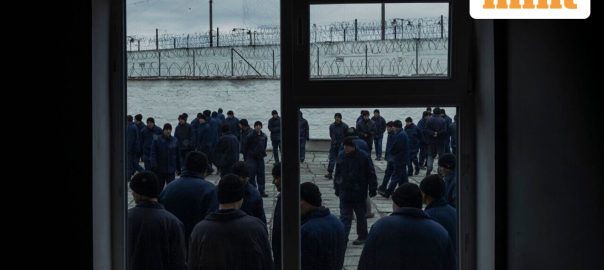
Copyright © HT Digital Streams Limited All rights reserved. Thomas Grove, The Wall Street Journal 6 min read 22 Dec 2025, 16:22 IST Russian prisoners of war in a Ukrainian camp. (Photo: Sasha Maslov for WSJ) Summary The joy of homecoming is short-lived for returning prisoners as they face insults, cut salaries and orders to return to the front lines. When a self-described patriotic, middle-aged Russian soldier was released from a prisoner-of-war camp in Ukraine earlier this year, he called his family to tell them he was alive, free and back on Russian soil. As the phone was passed, he told them he might be back in a few weeks in time for his son’s birthday. He never made it. Instead, he was subjected to weeks of interrogation by Russia’s security services—then sent back to the front. Before long, he went missing again on the front lines near the occupied Ukrainian city of Donetsk. This time his family fears he is dead. One compared the situation to being trapped in a circle of hell. Across Russian towns and cities, authorities have celebrated the patriotism of volunteers joining Russian President Vladimir Putin’s war effort. Veterans returning from the front are sometimes ionized on television and promised privileged positions in the local and regional governments of an increasingly militarized Russia. But the fate of Russia’s prisoners of war has been an overlooked chapter of Moscow’s invasion of Ukraine. Before soldiers are even sent to the front, their commanders admonish them to blow themselves up with a grenade before submitting to Ukrainian captivity. Russian rapper Dmitry Kuznetsov, known as Husky, shared the sentiment in his new album. “I will not be captured, in my left hand a grenade, in my right, a grenade,” he rapped on one track. POWs and their families say the joy of coming home is short-lived. Those who choose to surrender face a return fraught with suspicion and shame. Salaries and one-time bonuses were a main reason so many agreed to go to war, but these could be cut off once captured. Thousands are now in financial limbo. “The country is at war,” said Valery Vetoshkina, a lawyer affiliated with the Russian non-governmental organization OVD-Info, a legal aid group. “The state does not encourage voluntary surrender.” When soldiers are returned to Russia, they are transported by bus from Belarus, which borders Russia and Ukraine, where most exchanges take place. Aside from periodic phone calls, they are isolated from their families for as long as a month while they are questioned by the Federal Security Service, or FSB, the military prosecutor’s office and Russia’s Investigative Committee. View full image A still from a video shows POWs boarding a bus after an exchange in May. (Sasha Maslov for WSJ) In some cases, the officers are meant to sniff out any whiff of treason or collaboration. In others, investigators investigate for criminal violations. In 2022, amid the country’s chaotic mass mobilization, Russia criminalized voluntary surrender in hopes of discouraging the hundreds of thousands of workers from simply giving themselves up. Earlier this year, one of the first criminal rendition cases was opened when a Russian soldier, Roman Ivanishin, was sentenced to 15 years in a high-security penal colony after returning from Ukrainian captivity as part of a prisoner swap. The charges included voluntary surrender, attempted voluntary surrender and desertion of a military unit. After their month-long interrogation, most are returned to their units. Some are never given a gun again and instead are condemned to cleaning and endless drills. Others are immediately sent back to the front, where former prisoners and their families accuse unit commanders of either doling out punishment or sending the soldiers back to dangerous missions. The conditions on return can be so dire that some families have lobbied to keep their sons out of prisoner exchanges. The conditions in Ukrainian POW camps are much more humane than in Russian POW camps for Ukrainians, where torture was at times systematic. The Kremlin did not respond to a request for comment. In August, news came back that 31-year-old Igor Dolgopolov had been made a prisoner of war after being deployed to Chasiv Yar in eastern Ukraine. His relatives say they fear he might be included in any future swaps and then sent straight back to the front. One of Dolgopolov’s relatives said soldiers returned from a POW camp are no longer trusted and are humiliated and condemned by their unit commanders back home. The person said it would be better for them to stay and live in Ukraine, and even take citizenship there. According to the Geneva Conventions, to which Russia is a party, former prisoners of war cannot be employed in active military service, only in auxiliary roles. A Russian Defense Ministry paper seen by The Wall Street Journal argues that some of the provisions of the Geneva Convention do not apply to Russian prisoners of war as the war continues. Russia’s attitude toward POWs carries echoes of World War II, when POWs were viewed with suspicion and numerous orders made it illegal to surrender in the face of advancing Nazi soldiers. A phrase attributed to Soviet dictator Joseph Stalin has carried through popular culture: “We have no prisoners, only traitors.” This is still true today. Earlier this year, a former prisoner of war, Pavel Guguyev (45), was tried for collaborating with a foreign government. He faces a sentence of up to eight years after giving a series of interviews to Ukrainian journalists about his detention, his disapproval of the war and the conditions he suffered upon his return. View full image A still image from a video shows Pavel Guguyev being interrogated by a Ukrainian journalist in close-up. (Sasha Maslov for WSJ) In one video about a month after he was exchanged and sent back to Russia, he said he was interrogated by the FSB and sent to a military hospital in Podolsk, a town south of Moscow. He said other soldiers asked him why he didn’t blow himself up instead of allowing himself to be captured. Guguyev said that the FSB called returning soldiers “lost trust” and that prisoners sent back to the front lines were given menial tasks that did not involve firearms because they were no longer trusted. “They don’t let zeks go home,” he said, using prison slang for prisoners. “They use them like workers.” Conversations with several POWs showed a similar pattern of mistrust. Once back in Russia, they are interrogated, forbidden to go home to see their families and sent directly back to their commanders. One POW, who said he had been diagnosed with depression, said he had not received appropriate medical care or been allowed to see his family, but had also not been sent back to the front. Instead, his days are filled with menial tasks or guard duty. Another soldier said he boarded a plane to deploy back to the front, but was removed in front of his fellow soldiers just before takeoff because his superiors didn’t trust him. “‘Oh, are you a POW?'” he recounted the officer saying. “Then they took me off the plane, that was it.” Write to Thomas Grove at [email protected] Get all the Business News, Market News, Breaking News Events and Latest News Updates on Live Mint. Download the Mint News app to get daily market updates. more topics #russia ukraine war Read next story