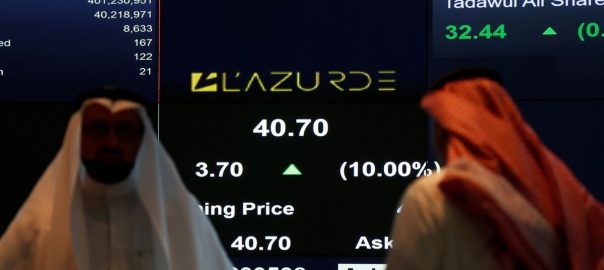
The Saudi stock market is moving in a cautious range at a time when sentiment remains volatile amid the absence of strong incentives and a clear decrease in liquidity, while investors continue to evaluate the impact of interest rates, oil movements and expectations regarding the financial results for the fourth quarter, limiting the market’s ability to break this direction and move to a next phase. The TASI general index started trading with a slight rise before moving into the red zone with a fall of 0.3%, to stay below the level of 10,500 points, under pressure from the leading shares of “Aramco”, “SABIC”, “ACWA Power” and “Al Rajhi”. The Saudi stock exchange is waiting for liquidity to stimulate its shares. Ghassan Al-Thukair, CEO of Financial Standard, believes that the Saudi market is still moving in a downward trend, suggesting that the index will test the level of 10,000 points as a basic support area, and will rule out breaking it downwards. Al-Thukair confirms that the decisive factor for the market to move to a more robust path is the improvement of liquidity, which can be achieved if the market is fully opened to foreign investors and the weight of the Saudi market in the MSCI index is increased. Al-Thukair explained that the reduction of interest rates has so far not provided real support to the market due to the scarcity of liquidity in banks, as high returns on deposits have encouraged investors to prefer bank savings to investing in higher-risk stocks. Regarding expectations for corporate results, Al-Thukair expects an improvement in the results of the fourth quarter compared to the third quarter, supported by improved profitability margins and a gradual decrease in borrowing costs, but he reiterates that liquidity growth will remain the most prominent factor in determining the market’s direction in the next phase. He also pointed out that during the last period initial public offerings have withdrawn a significant part of liquidity from the market, in addition to the impact of the market’s correlation with oil prices, which has contributed to the recent pressure on the index. Al-Thukair estimates that the index will move in a limited range during the coming period, which is unlikely to exceed the level of 10,800 points. Interest rates are putting pressure on the Saudi stock market. Ikrami Abdullah, chief financial analyst of Al-Eqtisadiah newspaper, for his part, believes that interest rates are a decisive element in market movement, and explains that the “SIBOR” index, or the Saudi interbank interest rate, has recently put pressure on the stock market, as despite the price cut, the index has risen above 5% negatively and it also negatively affects their costs, and it also affects companies in terms of more than 5%. attractiveness of investment assets outside the market. Abdullah also pointed out that oil prices, despite their rise, remain close to the level of $60 per barrel, which is not enough to reverse the course of the market, noting that there is reluctance among investors to enter the market. As for the main sectors that could attract the attention of investors, Abdullah believes that the sectors related to the local economy, including the communications sector, information technology, healthcare and banks, all have potential opportunities. He expects investors to make selective moves in the market, both in terms of buying and selling, in the absence of a clear path to the market. Limited participation of institutions limits the market’s rise. Today’s performance comes after yesterday’s rally in stocks, which has yet to translate into real strength in performance, given the continued weakness of liquidity, according to Mary Salem, a financial analyst at Al-Sharq. Yesterday’s rise was accompanied by trading volumes amounting to about 2.6 billion riyals, which is below the level needed to support a sustainable upward trend, according to Salem, who indicated that activity in the market depends to a greater extent on individual investors, while the participation of institutions and funds remains limited. She added that this keeps the market within the same range it has been moving within for some time, with no clear ability to break this path unless liquidity levels improve significantly. Salem warns that if the profit-taking pattern that appeared at the end of the previous session continues, the setbacks may not cause a fundamental change in the performance of the general index or its annual path. While she believes that the improvement in oil prices, with Brent crude trading close to $61 per barrel, represents a positive factor supporting morale, she affirms that the crucial factor remains liquidity, as it is – as she described it – “the main catalyst capable of changing the trend,” without which the market can remain in a sideways movement despite the availability of the many attractive equity factors. Arabian Mills At the same time, “Arabian Mills” shares rose 0.3% after the company announced in two separate disclosures on the Tadawul website a recommendation to distribute profits totaling 51.3 million riyals for 2025, in addition to a voluntary payment of 50 million riyals from an existing Murabast Saudi deal with BankFirbaha. Abdullah said that the cash distributions announced by Arab Mills are positive news. He concluded by saying the company has therefore increased its dividend by 70% for 2024, at a time when it is implementing expansions to increase production capacity, either for meal or feed, indicating the strength of its conditions. At the same time, Abdullah believes that the voluntary payment from the financing agreement with “First Saudi” will contribute to the reduction of financing costs, which will reflect positively on the company’s financial results, indicating that this step comes within the company’s ongoing efforts to strengthen its financial position and maintain its performance. He added, “The company’s effort to reduce financing costs has been a continuous approach in the past nine months, especially since its debt rate is somewhat high. It has a long-term loan of about 720 million riyals.”