Adware marketing campaign exploits Chrome and Safari bugs to serve over 1B malicious advertisements

[ad_1]
Menace actors have exploited “obscure” bugs in WebKit and Chrome browsers to serve over 1 billion malicious advertisements in lower than two months, a brand new analysis has discovered.
The attackers focused iOS and macOS customers with zero-day vulnerabilities in Chrome and Safari browsers that bypassed built-in safety protections to indicate potential victims intrusive pop-up advertisements, and redirect customers to malicious websites.
Cybersecurity agency Confiant has been extensively monitoring the group — dubbed “eGobbler” — a reputation impressed by the Thanksgiving vacation, when researchers noticed their malvertising campaigns for the primary time final 12 months.
It’s value noting right here that the open-source WebKit browser rendering engine is the idea for Safari, along with the browsers bundled with Amazon Kindle e book reader and Samsung Tizen OS.
Blink — the rendering engine that powers Google Chrome — can be a fork of WebKit. However on iOS, Chrome and different third-party browsers depend on WebKit as a result of restrictions imposed by Apple’s App Retailer Assessment Pointers (Part 2.5.6).
That is removed from the primary time eGobbler has run amok with malicious advertisements. Again in April, the group exploited a Chrome for iOS exploit (CVE-2019–5840) to bypass the browser‘s built-in pop-up blocker to ship pretend advertisements to 500 million classes of customers from the US and Europe in underneath every week.
The flaw was finally patched after Google launched a Chrome 75 replace in June. However now, it seems eGobbler goes after a separate WebKit vulnerability in JavaScript to generate profitable redirects.
Confiant mentioned the brand new exploit (CVE-2019-8771) — now fastened by Apple in iOS 13 and Safari 13.0.1 after the bug was personal disclosed to the corporate on August 7 — leveraged the “onkeydown” occasion, a JavaScript perform that’s executed each time a person presses a key on the keyboard, to bombard customers with pop-ups when customers work together with a website by urgent a key.
What makes the JavaScript exploit extra insidious is that it additionally impacts desktop browsers, thereby giving eGobbler a possibility to broaden their operations past cell units.
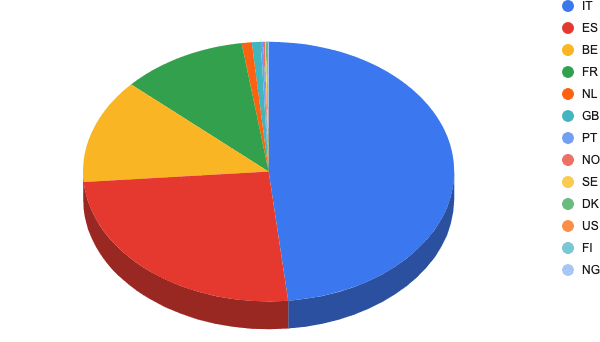
Between August 1 and September 23, the group served a staggering 1.16 billion malware-ridden advertisements, with European international locations like Italy and France changing into the prime targets.
As all the time, one of the simplest ways to guard towards such adware campaigns is to be vigilant of your looking exercise and maintain your browsers updated.
Learn subsequent:
How an AI educated to learn scientific papers might predict future discoveries
[ad_2]
Supply hyperlink


