The UK is investing £250 million in healthcare AI and I’ve some questions

[ad_1]
The UK authorities at the moment introduced it could make investments £250 million (roughly $300 million) into synthetic intelligence know-how, which might be utilized by the general public healthcare system, referred to as the NHS, to enhance the standard of care.
This pioneering transfer comes from Boris Johnson, the newly topped prime minister, in addition to Matt Hancock, the present Well being Secretary, who already has a popularity for being one of many few tech-conscious members of presidency. Common readers of TNW will recall when he launched his personal ill-fated social community to attach with constituents.
The federal government claims this AI initiative will enhance care and reduce ready instances for very important procedures. It’s value including that the NHS additionally efficiently makes use of AI in a number of vital areas, so this isn’t essentially a primary for this beloved healthcare service. The Guardian notes that it’s utilized in most cancers screening procedures, in addition to in figuring out sufferers who’re more likely to miss appointments, in an effort to ship focused reminders.
Nonetheless, there are causes to be involved. Particulars are skinny on the bottom, and it’s not clear how this new authorities AI healthcare lab will work in observe. With that in thoughts, I’ve received some questions:
Who will do the work?
It’s truthful to say that giant healthcare IT tasks don’t have one of the best popularity within the UK. Throughout the 2000’s, the Tony Blair-led Labour authorities launched into an bold initiative to digitize procedures that have been in any other case analog. It was nothing in need of a calamitous and dear failure that went over finances by a number of billion kilos, solely to be scrapped by the coalition authorities in 2011.
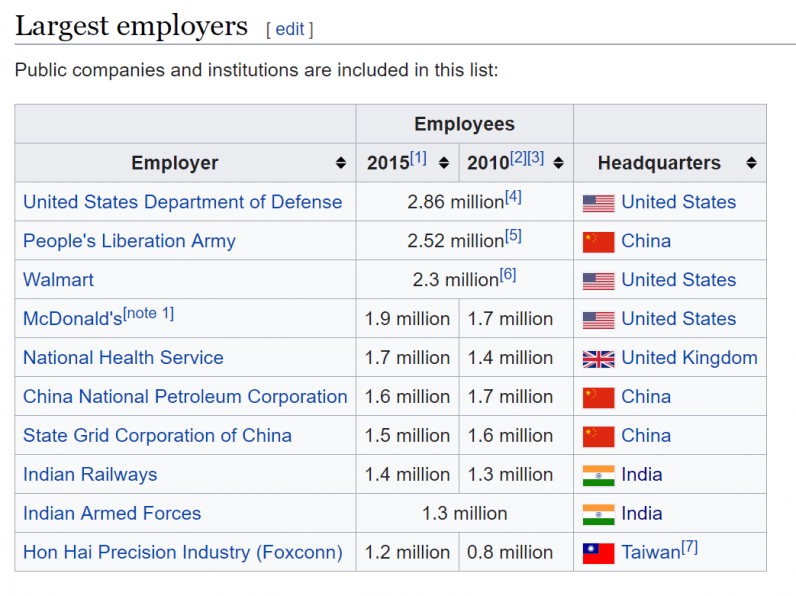
The explanations for failure might be attributed to the sheer scope of the NHS. In 2015, it was ranked because the world’s fifth largest employer, behind McDonald’s and Walmart. Constructing a system to accommodate 1000’s of surgical procedures, neighborhood clinics, and hospitals just isn’t a simple job.
However a lot of the blame was in the end pointed on the Blair authorities’s affection for outsourcing. An unlimited proportion of labor was finished by giant multinational IT firms, specifically Laptop Sciences Company (CSC) and Fujitsu, each of whom did a substandard job whereas concurrently milking the general public purse for something they may get.
One other outsourcing agency utilized by the federal government on IT tasks, Capita, has a equally woeful popularity, incomes the unkind moniker “Crapita” from the legendary British satirical journal Personal Eye consequently.
So, Boris: let me ask you a query. Who is definitely going to construct these methods? Will the contract go to those giant multinationals, or will you’re taking the work in-house?
Personally, I’m hoping for the latter. When authorities tech tasks are finished by inside groups, they tend to be higher executed, in addition to cheaper to construct. An important instance of that’s the Authorities Digital Service (GDS), who’ve finished a tremendous job of standardizing how the federal government’s public-facing IT system’s work, and was the product of the 2010 Tory/Lib Dem coalition.
They’ve additionally finished some genuinely modern stuff, too. An instance of that is GOV.UK Confirm, which permits freelancers and sole-traders to file their tax returns with out having to recollect arcane ID numbers and passwords.
The largest downside for this new AI initiative, nevertheless, will doubtless be discovering folks to do the work.
Though the UK is a hotbed of AI expertise, a lot of it has been snatched up by Google’s DeepMind and Microsoft Analysis. Subsequently, the NHS will doubtless need to recruit from overseas, which can grow to be loads tougher after Brexit. Candidates should take care of new bureaucracies, notably in terms of immigration, and the weak pound will make working within the UK far much less enticing to overseas candidates.
How will you shield folks’s privateness?
I’ve at all times felt that the time period “synthetic intelligence” is a little bit of a misnomer, largely as a result of a lot of the event and coaching course of is guided by human palms. We witnessed this simply yesterday with Microsoft, when it emerged that third occasion contractors have been accessing recordings of translated Skype calls as a part of high quality enchancment processes.
In current weeks, the opposite three main tech firms — Google, Apple, and Amazon — have all discovered themselves embroiled in comparable scandals.
So, Boris, given the inherent sensitivity of individuals’s healthcare information, how will you deal with this tough side of constructing AI purposes? Will you inform sufferers that engineers and QA testers might be concerned within the growth and coaching technique of any algorithm, and can due to this fact have entry to their personal healthcare information?
And crucially, what is going to you do to keep away from this information being exfiltrated to a third-party, like how a Microsoft contractor offered Motherboard with snippets of individuals’s intimate (and typically deeply lurid) Skype calls?
Will these AI purposes symbolize the variety of British society?
Britain is a splendidly various nation. Over 250 languages are spoken in London alone, making it probably the most linguistically various metropolis on the earth. Round 3.Three p.c of individuals dwelling in England and Wales are black. An additional 7.5 p.c determine as Asian, together with Indian, Pakistani, and Chinese language. Roughly 2.2 p.c are of a combined background, whereas 0.four p.c determine as Arab.
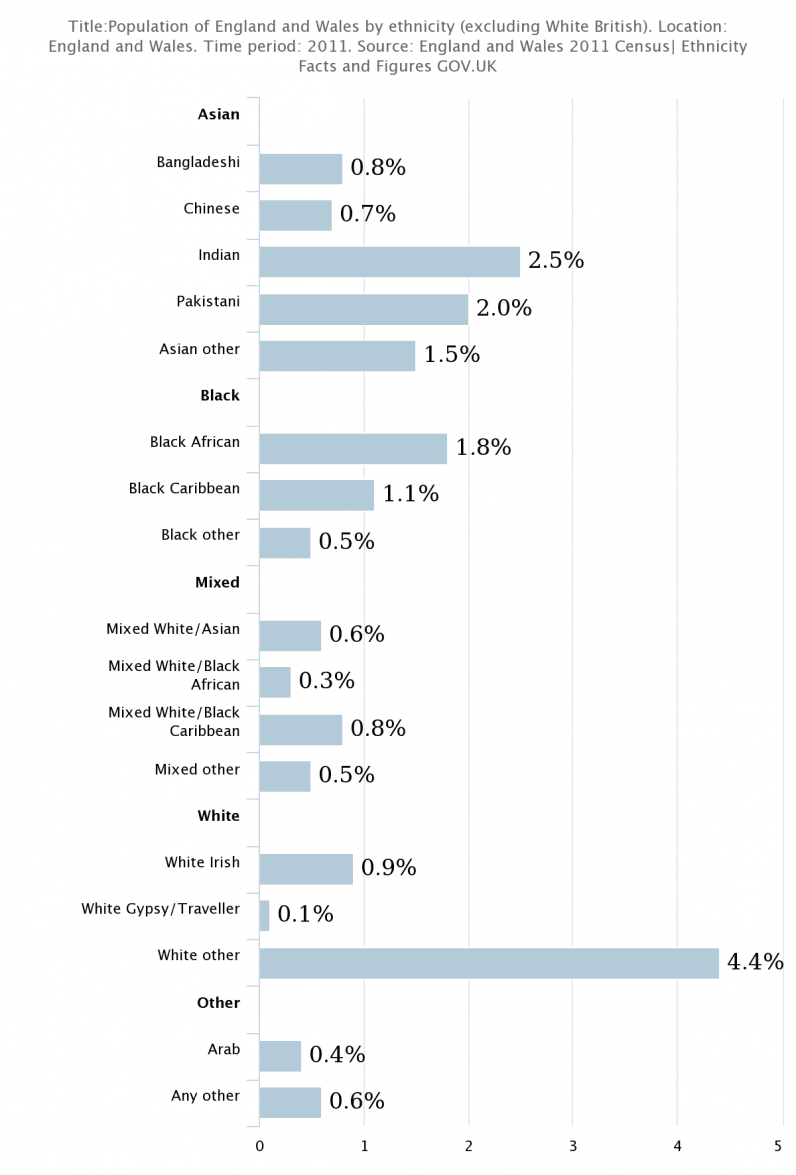
If these healthcare AI purposes are solely educated on a particular demographic – say, white folks – it may have adverse healthcare outcomes for these of an ethnic minority background.
Boris, what efforts will you’re taking to make sure that any purposes symbolize the inherently various nature of British society, so everybody can get the suitable and enough healthcare they want?
Will this get in the best way of clinicians?
The fantastic thing about the NHS over the American healthcare system (in addition to the truth that it’s free and medical chapter isn’t a factor within the UK) is that docs aren’t lumbered with a lot administrative work, like billing or negotiating costs with insurance coverage firms. We depart nurses to nurse, and docs to physician, and the top result’s a healthcare system that’s among the many most cost-efficient on the earth.
Boris, are you able to assure that any new AI healthcare apps gained’t grow to be a hindrance to medical professionals, consuming time that may in any other case be spent coping with sufferers?
The whole level of AI, I do know, is to automate duties that may in any other case be finished by people. But when clinicians are lumbered with instruments which are clunky and sophisticated (see: any NHS IT challenge developed within the 2000s), this strategy might backfire.
It’s additionally value noting that there are a lot of docs and nurses (in addition to assistants, scientists, and receptionists) who’ve labored within the NHS for many years. They’re good at their jobs, however they’re not digital natives, and so they in all probability will wrestle with sophisticated new laptop methods.
Newer isn’t at all times higher.
Are you certain the cash couldn’t be higher spent?
The NHS is a beloved establishment, nevertheless it’s additionally one in disaster, largely because of years of neglect below successive coalition and Tory governments. The tip result’s that docs and nurses are leaving in droves, and the NHS is struggling to switch them.
The poisonous ambiance created by Brexit, mixed with the elimination of monetary incentives to coach as nurses and docs, has created a power recruiting disaster for the NHS, which confronted 97,000 vacant positions in late 2017 alone.
Any new AI purposes might decrease the burden on struggling clinicians. It might not. Both method, Boris, are you certain this cash couldn’t be higher spent elsewhere? Maybe on recruiting nurses, hiring extra docs, or paying in the direction of the price of restoring healthcare training bursaries, which have been scrapped in 2017?
I’m not saying that spending £250 million on healthcare AI is a nasty thought. However you need to perceive my skepticism. The federal government has a observe file for failure in terms of bold IT tasks. And there’s nothing extra bold than altering how healthcare works.
[ad_2]
Supply hyperlink


