الأرشيف الشهري: ديسمبر 2025

Maruti Suzuki Celerio scores 3 stars in GNCAP crash test. Top 5 Safety Features

Maruti Suzuki Celerio scores 3 stars in GNCAP crash test. Top 5 Safety Features

Maruti Suzuki Celerio scored 18.04 points out of 34 for adult occupant protection and 18.57 points out of 49 for child occupant protection in the Global NCAP crash test. Limited time offers on popular models Maruti Suzuki Celerio scored 18.04 points out of 34 for adult occupant protection and 18.57 points out of 49 for child occupant protection in the Global NCAP crash test. Maruti Suzuki Celerio, long one of the popular small hatchbacks in India, has been crash tested by Global NCAP (GNCAP). The Maruti Suzuki Celerio scored a three-star safety rating for Adult Occupant Protection (AOP) and two-star rating for Child Occupant Protection (COP) in the Global NCAP crash test. The hatchback scored 18.04 points out of 34 in AOP, and 18.57 points out of 49 in COP. Interestingly, this safety rating comes as Maruti Suzuki has made six airbags and Electronic Stability Control (ESC) standard for the Celerio, which is marked as a major update to the safety kit offered on the hatchback. But, despite the added safety equipment, the hatchback still fell short of higher safety standards under the Global NCAP’s updated test protocols. Maruti Suzuki Celerio: Key Safety Features That Made a Difference in GNCAP Crash Test Driver Co-Driver Rear Front Airbags Standard Standard NA Front Belt Pretensioner Standard Standard None Front Belt Load Limiter Standard Standard None Frontal Knee Airbag No No NA Side Head Curtain Airbags Standard Standard Standard Side Head (Thorax Head) Airbag No No No Side Airbag NA Side Airbag No ISOFIX No Side Airbag No ISOFIX Integrated CRS NA No No Maruti Suzuki Celerio: Fall short despite having key safety features The upgraded version of the Maruti Suzuki Celerio failed the Global NCAP crash test despite having some of the key safety features. Here’s a quick look at the top five safety features available for the Maruti Suzuki Celerio. Maruti Suzuki Celerio: Safety Features Dual Front Airbags Side and Curtain Airbags Seat Belt Reminder for All Front Seat Belt Force Limiter and Pre-Tensioner Hill Hold Assist Speed Sensing Automatic Door Lock Impact Sensing Automatic Door Unlock ABS with EBD Pedestrian Protection Electronic Stability Control (ESC) Reverse Parking Assist Sensors Maruti Sizuki Airbags Most Featured Suzuki Airbags of Suzuki Celerio: Celerio is six airbags, which include dual front airbags for the driver and front passenger as well as side and curtain airbags. This definitely increases the safety level for the hatch back, compared to the model equipped with only two airbags. Maruti Suzuki Celerio: Hill Hold Assist The Hill Hold Assist (HHA) is an extremely useful feature for the drivers. This technology allows the car to stop when the driver takes his or her foot off the brake pedal and the vehicle climbs an incline. Maruti Suzuki Celerio: ABS with EBD ABS (Anti-lock Braking System) with EBD (Electronic Brakeforce Distribution) works together. ABS prevents wheel lock during hard braking for steering control, while EBD intelligently adapts braking force to each wheel based on load and conditions, optimizing stopping power and stability, reducing skidding and ensuring balanced, shorter stops. Maruti Suzuki Celerio: ESC Electronic Stability Control (ESC), also known as Electronic Stability Program (ESP), is an active car safety system that prevents skidding and loss of control by automatically applying individual brakes and/or reducing engine power to help steer the vehicle back in the driver’s intended direction, especially during sudden maneuvers or on slippery surfaces, reducing the stability of the vehicle and reducing the rollover risk. Maruti Suzuki Celerio: Seat Belt Buckler and Force Limiter A seat belt buckler and force limiter work together in accident situations. The pre-tensioner quickly tightens the belt to remove slack, securing the occupant to the seat, while the force limiter then allows a controlled amount of belt stretch once peak force is reached, reducing chest injury by preventing the belt from tightening too tightly.


What your resting heart rate says about your heart health, explains Delhi’s top cardiologist

What your resting heart rate says about your heart health, explains Delhi’s top cardiologist

Delhi cardiologist Dr Alok Chopra explains why your resting heart rate can be one of the most important – and overlooked – signals of heart health, and how tracking it can provide early warning signs. Dr. Chopra explained that resting heart rate (RHR) is one of the most powerful indicators of how efficiently the heart is functioning. (Unsplash) A single number can quietly show how fit—or strained—your heart really is, and it’s not cholesterol or blood pressure. According to Dr. Alok Chopra, your resting heart rate can be one of the simplest and most powerful indicators of heart health. In a recent Instagram video shared on December 22, the senior cardiologist urged people to pay more attention to their resting heart rate – the number of times the heart beats per minute when the body is completely at rest, such as while sitting or lying down. “For most people, a healthy resting heart rate ranges between 60 and 80 beats per minute,” explained Dr. Chopra. However, those who are physically fit or exercise regularly often record much lower numbers, sometimes in the 40s or 50s. This, he said, reflects a stronger and more efficient heart. To put it simply, a well-trained heart pumps more blood with each beat. “A less fit heart may require about 70 beats per minute to circulate the same volume of blood that a fitter heart can manage in about 50 beats,” he noted. Fewer beats for the same output means less stress on the heart over time. Watch the video here: But the opposite can also be revealing. A consistently high resting heart rate, Dr Chopra warned, could indicate that the heart is under stress. Poor sleep, dehydration, chronic stress, excess caffeine intake, or even an undiagnosed medical condition can cause resting heart rate to be higher than normal. The encouraging part, he said, is that resting heart rate is not fixed. Lifestyle changes can make a significant difference. Regular physical activity, meditation or breathing exercises, adequate hydration, balanced nutrition and quality sleep all help to lower and stabilize resting heart rate over time. Dr Chopra also emphasized the importance of tracking the number rather than checking it once. A sudden upward trend in resting heart rate can act as an early warning sign – often indicating problems before more serious symptoms appear. “Your body speaks before big problems arise,” he said, urging viewers to listen closely. “So the real question is – what is your resting heart rate telling you today?” Dr Chopra had earlier shared an ‘AQI survival guide’ for residents struggling with dangerous pollution levels in Delhi. The 2.8-minute video highlighted what health experts have repeatedly warned is no longer a seasonal spike but a long-term public health crisis. Dr Chopra noted how children continue to attend school on dangerous days and how mask use has declined despite dangerous AQI readings.

Returning Russian POWs pay a high price for choosing surrender over death

Returning Russian POWs pay a high price for choosing surrender over death

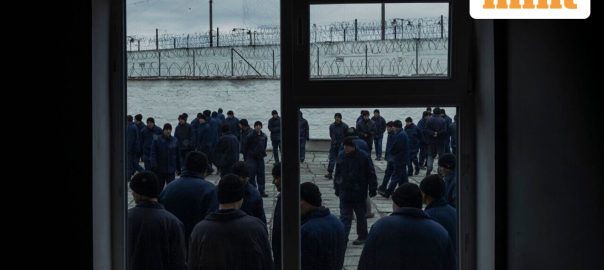
Copyright © HT Digital Streams Limited All rights reserved. Thomas Grove, The Wall Street Journal 6 min read 22 Dec 2025, 16:22 IST Russian prisoners of war in a Ukrainian camp. (Photo: Sasha Maslov for WSJ) Summary The joy of homecoming is short-lived for returning prisoners as they face insults, cut salaries and orders to return to the front lines. When a self-described patriotic, middle-aged Russian soldier was released from a prisoner-of-war camp in Ukraine earlier this year, he called his family to tell them he was alive, free and back on Russian soil. As the phone was passed, he told them he might be back in a few weeks in time for his son’s birthday. He never made it. Instead, he was subjected to weeks of interrogation by Russia’s security services—then sent back to the front. Before long, he went missing again on the front lines near the occupied Ukrainian city of Donetsk. This time his family fears he is dead. One compared the situation to being trapped in a circle of hell. Across Russian towns and cities, authorities have celebrated the patriotism of volunteers joining Russian President Vladimir Putin’s war effort. Veterans returning from the front are sometimes ionized on television and promised privileged positions in the local and regional governments of an increasingly militarized Russia. But the fate of Russia’s prisoners of war has been an overlooked chapter of Moscow’s invasion of Ukraine. Before soldiers are even sent to the front, their commanders admonish them to blow themselves up with a grenade before submitting to Ukrainian captivity. Russian rapper Dmitry Kuznetsov, known as Husky, shared the sentiment in his new album. “I will not be captured, in my left hand a grenade, in my right, a grenade,” he rapped on one track. POWs and their families say the joy of coming home is short-lived. Those who choose to surrender face a return fraught with suspicion and shame. Salaries and one-time bonuses were a main reason so many agreed to go to war, but these could be cut off once captured. Thousands are now in financial limbo. “The country is at war,” said Valery Vetoshkina, a lawyer affiliated with the Russian non-governmental organization OVD-Info, a legal aid group. “The state does not encourage voluntary surrender.” When soldiers are returned to Russia, they are transported by bus from Belarus, which borders Russia and Ukraine, where most exchanges take place. Aside from periodic phone calls, they are isolated from their families for as long as a month while they are questioned by the Federal Security Service, or FSB, the military prosecutor’s office and Russia’s Investigative Committee. View full image A still from a video shows POWs boarding a bus after an exchange in May. (Sasha Maslov for WSJ) In some cases, the officers are meant to sniff out any whiff of treason or collaboration. In others, investigators investigate for criminal violations. In 2022, amid the country’s chaotic mass mobilization, Russia criminalized voluntary surrender in hopes of discouraging the hundreds of thousands of workers from simply giving themselves up. Earlier this year, one of the first criminal rendition cases was opened when a Russian soldier, Roman Ivanishin, was sentenced to 15 years in a high-security penal colony after returning from Ukrainian captivity as part of a prisoner swap. The charges included voluntary surrender, attempted voluntary surrender and desertion of a military unit. After their month-long interrogation, most are returned to their units. Some are never given a gun again and instead are condemned to cleaning and endless drills. Others are immediately sent back to the front, where former prisoners and their families accuse unit commanders of either doling out punishment or sending the soldiers back to dangerous missions. The conditions on return can be so dire that some families have lobbied to keep their sons out of prisoner exchanges. The conditions in Ukrainian POW camps are much more humane than in Russian POW camps for Ukrainians, where torture was at times systematic. The Kremlin did not respond to a request for comment. In August, news came back that 31-year-old Igor Dolgopolov had been made a prisoner of war after being deployed to Chasiv Yar in eastern Ukraine. His relatives say they fear he might be included in any future swaps and then sent straight back to the front. One of Dolgopolov’s relatives said soldiers returned from a POW camp are no longer trusted and are humiliated and condemned by their unit commanders back home. The person said it would be better for them to stay and live in Ukraine, and even take citizenship there. According to the Geneva Conventions, to which Russia is a party, former prisoners of war cannot be employed in active military service, only in auxiliary roles. A Russian Defense Ministry paper seen by The Wall Street Journal argues that some of the provisions of the Geneva Convention do not apply to Russian prisoners of war as the war continues. Russia’s attitude toward POWs carries echoes of World War II, when POWs were viewed with suspicion and numerous orders made it illegal to surrender in the face of advancing Nazi soldiers. A phrase attributed to Soviet dictator Joseph Stalin has carried through popular culture: “We have no prisoners, only traitors.” This is still true today. Earlier this year, a former prisoner of war, Pavel Guguyev (45), was tried for collaborating with a foreign government. He faces a sentence of up to eight years after giving a series of interviews to Ukrainian journalists about his detention, his disapproval of the war and the conditions he suffered upon his return. View full image A still image from a video shows Pavel Guguyev being interrogated by a Ukrainian journalist in close-up. (Sasha Maslov for WSJ) In one video about a month after he was exchanged and sent back to Russia, he said he was interrogated by the FSB and sent to a military hospital in Podolsk, a town south of Moscow. He said other soldiers asked him why he didn’t blow himself up instead of allowing himself to be captured. Guguyev said that the FSB called returning soldiers “lost trust” and that prisoners sent back to the front lines were given menial tasks that did not involve firearms because they were no longer trusted. “They don’t let zeks go home,” he said, using prison slang for prisoners. “They use them like workers.” Conversations with several POWs showed a similar pattern of mistrust. Once back in Russia, they are interrogated, forbidden to go home to see their families and sent directly back to their commanders. One POW, who said he had been diagnosed with depression, said he had not received appropriate medical care or been allowed to see his family, but had also not been sent back to the front. Instead, his days are filled with menial tasks or guard duty. Another soldier said he boarded a plane to deploy back to the front, but was removed in front of his fellow soldiers just before takeoff because his superiors didn’t trust him. “‘Oh, are you a POW?'” he recounted the officer saying. “Then they took me off the plane, that was it.” Write to Thomas Grove at [email protected] Get all the Business News, Market News, Breaking News Events and Latest News Updates on Live Mint. Download the Mint News app to get daily market updates. more topics #russia ukraine war Read next story

How to take care of an air purifier that works 24/7 on peak pollution days: Expert guide

How to take care of an air purifier that works 24/7 on peak pollution days: Expert guide

Your air purifier is working hard when you run all day. Learn practical steps, from filter care to placement and cleaning, to keep it efficient, long-lasting and delivering fresh indoor air without frequent breakdowns. Do you run air purifiers all day? Follow these quick care tips to make it last longer. By Aishwarya Faraswal I am a seasoned content and copywriter with over four years of experience in a bunch of domains like entertainment, fashion, beauty, education and home appliances. I use my experience covering this variety of industries to help readers find the latest products for their daily use. These days, many of us run our air purifiers throughout the day, and it really is necessary. Indoor air quality changes all the time from cooking, dust, pet hair, outdoor pollution, and even just breathing. Running the purifier continuously helps keep the air cleaner, especially in busy homes or polluted cities. Modern models are designed for long hours and are quite energy efficient, but they still require care. If you leave your purifier on all day, simple maintenance steps will keep it working well, improve air quality and extend its life. 1. Clean or replace filters in time Filters are the heart of any air purifier. Over time, they collect dust, pollen and small particles. A clogged filter not only reduces airflow, but also lowers cleaning efficiency. Most HEPA filters should be checked and replaced monthly according to the manufacturer’s advice, often every 6–12 months for HEPA and 3–6 months for carbon filters if used heavily. Many purifiers have indicator lights or warnings that remind you when it’s time to clean or replace filters, don’t ignore them. Cleaning the pre-filter regularly can slow down dust build-up on the main filter and make it last longer. 2. Keep the purifier in the right place Where you place your air purifier matters. Make sure it’s on a flat, open surface with plenty of space around it, so air can flow in and out freely. Avoid putting it right against walls, in corners or behind furniture, as blocked vents make the unit work harder and reduce performance. 3. Start it smart but consistent Leaving your air purifier on throughout the day is generally recommended because indoor air quality changes even when it looks clean. By running it all day, the device can continuously reduce pollution instead of playing catch-up. Many purifiers now have automatic mode, which adjusts the fan speed based on detected air quality, saving energy and reducing noise. 4. Regular cleaning makes a big difference Dust and debris can collect on the outside and around intake openings. Wiping the exterior weekly with a soft damp cloth and vacuuming vents occasionally helps maintain airflow. Always unplug the unit before any cleaning to avoid electrical hazards. 5. Avoid common mistakes Do not use harsh chemicals or wash filters with water unless the manual specifically states that they are washable. Most HEPA and carbon filters are NOT water washable; getting them wet can damage the fibers and make them less effective. Also, avoid touching air quality sensors; they are delicate and essential for automatic settings. Keep it running smoothly An air purifier that works all day needs a little attention, but not much. With regular filter care, correct placement, simple cleaning and awareness of how your device works, you’ll get the clean air benefits without interruptions or performance drops.

Sumatra disaster victims As of December 22: 1,106 people

Sumatra disaster victims As of December 22: 1,106 people

Djakarta – The death toll from floods and landslides in Aceh, North Sumatra and West Sumatra continues to rise. Today, the search team found 16 bodies. “From today, Monday, there was an increase in both findings and identification results that were carried out. From today, the total number of recurrences increased by 16 people from 1,090 on Saturday and Sunday. So from today it is 1,106 people,” said the head of the BNPB Disaster Data, Information and Communication Center, Abdul Muhari, Monday, (2222/1 pers.). Scroll TO CONTINUE CONTENT The following is data on the number of deaths for December 22, 2025: Aceh: 477 deaths, North Sumatra: 369 deaths, West Sumatra: 260 deaths. Abdul Muhari said the number of missing victims decreased by 10 people. So the search for victims is still 175 people. “There were 502,570 people who were displaced, most of whom were in the last week, quite a bit less last week,” he said. He said some residents returned to their homes and there were some residents who stayed at their relatives’ residences outside the disaster-stricken area. Abdul Muhari also said that today is the last week before the closure of the extended emergency response phase in Aceh, North Sumatra and West Sumatra. He said the government continues to prioritize aspects of post-disaster management. “Seeking aid for victims, distribution of logistics, restoration of road access, communication access and restoration of the electricity and fuel energy sectors,” he explained. (idn/dhn)

Central Jakarta District Court says it has no authority to order Rp. 125 T Lawsuit against Gibran-KPU

Central Jakarta District Court says it has no authority to order Rp. 125 T Lawsuit against Gibran-KPU

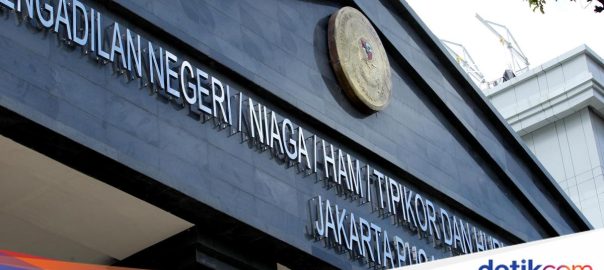
Jakarta – The Central Jakarta District Court has declared that it has no authority to hear the civil lawsuit of a citizen named Subhan against Vice President Gibran Rakabuming Raka and the Indonesian KPU. The judge of the Central Jakarta District Court granted the defendants’ exception. “After I checked the decision, the defendant accepted the exception and said that the district court had no authority to hear this case and charged the case to the plaintiff,” Central Jakarta District Court spokesman Sunoto told reporters on Monday (22/12/205). Scroll TO CONTINUE CONTENT He said the case process at the Central Jakarta District Court has ended. He said the parties could take other legal steps. “Well, that means if there’s a ruling that says the District Court has no jurisdiction, that means that’s a final decision, which ends this case, obviously the party that’s dissatisfied can file legal action,” he said. Sunoto also explained the reasons why the panel of judges declared that they had no authority to deal with the lawsuit. He said the authority to handle the lawsuit is the state administrative court (PTUN). “So there are several reasons why the court declared that it has no authority, the first of which is the authority of the PTUN. So here, basically, the essence of the lawsuit is to question the KPU’s decision, which is a state administrative decision, yes, based on article 47 of Law 51/2009, the authority is the state administrative court of an illegal act, so it does not change the argument he said. “Well, the second thing relates to the Election lex specialis in Law Number 7/2017 on Elections which regulates a special mechanism for the resolution of election disputes by Bawaslu and PTUN, not by the District Court,” he said. The first hearing of the lawsuit was held on Monday (8/9) at the Central Jakarta District Court. The lawsuit was registered with case number: 583/Pdt.G/2025/PN Jkt.Pst which heard is presided over by a panel of judges with members Abdul Latip and Arlen Veronica. Meanwhile, Defendant I is the Indonesian KPU. The following is the content of the lawsuit against Gibran and the KPU. 2. Declares that Defendant I and Defendant II jointly committed an unlawful act with all the consequences. 3. Declares that defendant I is invalid as Vice President of the Republic of Indonesia for the period 2024-2029. 4. Sentences the defendants to jointly and severally pay material and immaterial losses to the plaintiff and all Indonesian citizens in the amount of Rp. 125,000,010,000,000. 125 trillion) and deposit it in the state treasury 5. Declare that this decision can only be implemented (executable by stock), even if there are legal efforts to appeal, cassation of the defendants. 6. Sentence the defendants jointly and severally to pay forced money (coercive sum) in the amount of IDR 100,000,000 per day. 7. Sentence the Defendants jointly and severally to pay the costs incurred in this case (haf/dhn).

2 Cahaya Trans bus drivers arrested in connection with fatal accident on Krapyak toll road

2 Cahaya Trans bus drivers arrested in connection with fatal accident on Krapyak toll road

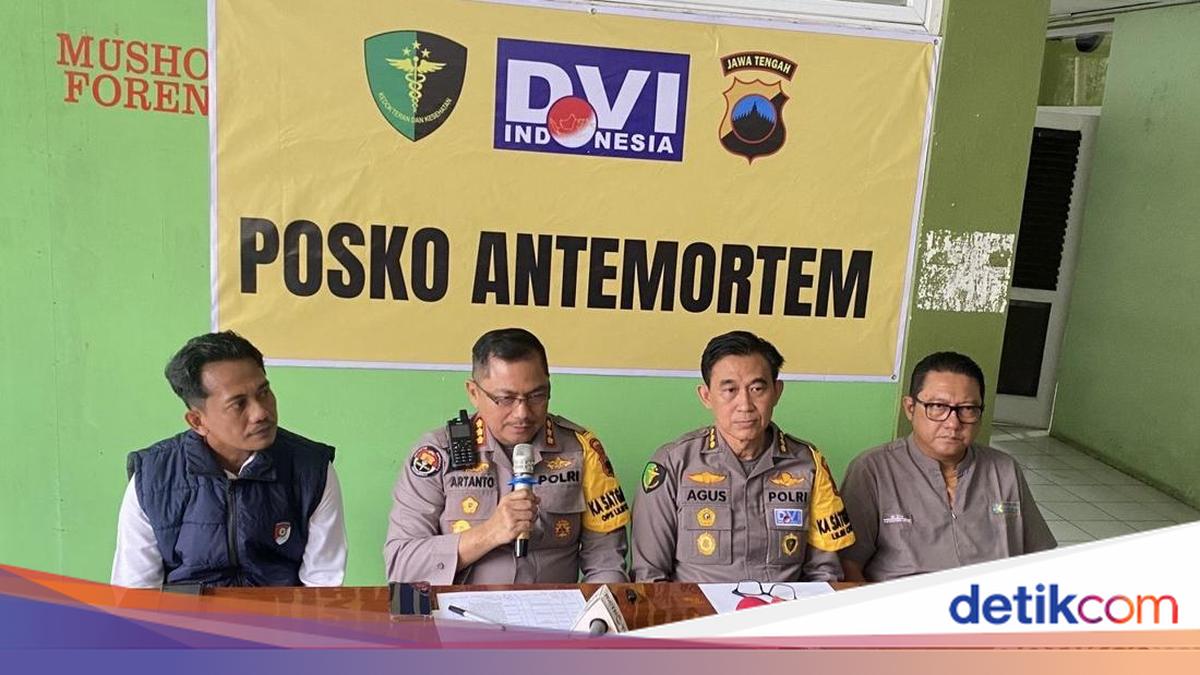
Semarang – Central Java Regional Police confirmed that the PO Cahaya Trans bus driver who was involved in a fatal accident at the Krapyak tola ride interchange, Semarang City, tested negative for drugs. The two bus drivers are currently being questioned. “So for initial information, this is a substitute or backup driver, where when he left Bogor for Jogja, he stopped in Subang to change drivers,” Central Java Regional Police Public Relations Chief Kombes Artanto said at Dr Kariadi Hospital as reported by detikJateng on Monday (22/12/2025). Scroll to continue content “And now the driver has been detained for his statement being taken by the police. There are two drivers. Congratulations, thank God,” Artanto continued. Based on blood tests, the bus driver was negative for drugs. However, the medical team is currently conducting an analysis examination on both of them. “And of course we are still waiting for the results and it is currently still in process,” he said. He said the police were still investigating the cause of the PO Cahaya Trans bus accident. A crime scene investigation will be conducted for the investigative process. Read more here (idh/dhn)

Minister of PANRB considers Mother’s Day as momentum to revive the role of women

Minister of PANRB considers Mother’s Day as momentum to revive the role of women

Jakarta – Commemoration of Mother’s Day, which falls every December 22, is again held in various regions in Indonesia. This year, the commemoration carries the theme: Women Empowered and Creative, Towards a Golden Indonesia 2045, which emphasizes the strategic role of women in national development. Minister for Empowerment of State Apparatuses and Bureaucratic Reform (PANRB), Rini Widyantini, said Mother’s Day is a momentum to reflect on the contribution of women in various sectors of life, from the family to the public sphere. “In the current era, Indonesian women have become agents of change who drive innovation, fight for justice and strengthen human values,” he said in a written statement on Monday (12/22/2025). PAGE TO CONTINUE CONTENT Commemoration of Mother’s Day is not only ceremonial and is not a celebration of Mother’s Day as it is understood in some countries. More than that, this moment is a form of appreciation and deep appreciation for all Indonesian women for their roles and contributions, both in the family, community, nation and state. The 97th Mother’s Day commemoration is also a space for reflection and appreciation for all Indonesian women, regardless of social, professional, cultural or regional background. Starting from women in coastal areas to urban areas; MSMEs, farmers, workers, health professionals and educators; to those active in government, politics, sports, art and technology, all of whom have made a real contribution to the progress of the nation. Rini stressed that the government needs concrete steps, cross-sector collaboration, public support and continuous commitment to ensure that Indonesian women can participate fully and equally in development. “I invite all governments, the business world, civil society, women’s organizations, the world of education, the media and all elements of the nation to strengthen cooperation in realizing justice and gender equality as the foundation for a Golden Indonesia 2045,” he concluded. (acn/ega)

Car destroyed after hitting light pole in Soetta, 2 people injured

Car destroyed after hitting light pole in Soetta, 2 people injured

Tangerang – A minibus crashed into a pole in front of the ramp at Terminal 2D of Soekarno-Hatta International Airport (Soetta), Tangerang, in the direction of Jakarta. The front of the car was destroyed after a single accident. “The accident at around 09:00 WIB involved a black Toyota Avanza four-wheel vehicle,” said head of Soetta Airport Police Traffic Unit AKP Sularno in his statement, Monday (22/12/2025). The accident happened this morning. The car was driven by NZ, a resident of Puri Artha Sentosa, Waringin Jaya Village, Bojong Gede District, Bogor Regency. Scroll TO CONTINUE CONTENT The accident started when the vehicle driven by NZ was traveling from west to east via Jalan P2 (towards Jakarta). When he arrived in front of the ramp leading to Terminal 2 of the Soetta Airport, the driver allegedly lost concentration and his vehicle hit a street light pole. The driver of the car allegedly lacked concentration until his vehicle hit a street light pole. (Special doc) Sularno said that the NZ driver suffered minor injuries to his hands and feet as a result of the incident. Meanwhile, the passenger named RZ was injured in the head, hands and feet. “The two victims were then rushed to Sitanala Hospital, Tangerang, to receive medical treatment,” explained Sularno. Sularno revealed that the accident caused material losses, namely the Toyota Avanza vehicle sustained serious damage to the front and the windshield was broken. Apart from that, the accident also caused damage to the Soekarno-Hatta airport facilities in the form of a street light pole. Sularno said the accident was believed to be the result of the NZ driver not being focused enough when driving his vehicle. “The accident is currently being handled by the Soekarno-Hatta Airport Police’s traffic unit for further processing,” Sularno said. Head of Public Relations for the Soetta Airport Police, Ipda Septian Wahyudi, reminded drivers of two-wheeled and four-wheeled vehicles to always be alert and concentrate on the road. “When you drive, prioritize safety, not speed. Remember, your beloved family is waiting for you at home. Let’s be pioneers of traffic safety together,” Septian said. According to Septian, if the public sees or experiences security and order disturbances at the Soekarno-Hatta Airport, they should immediately report it to the nearest police officer, or contact the 110 call center. (ybr/may)

National Police strictly monitor entertainment venues, prevent drug distribution near the end of the year

National Police strictly monitor entertainment venues, prevent drug distribution near the end of the year

Jakarta – The Directorate of Narcotic Crime (Dittipidnarkoba) Bareskrim Polri will intensify surveillance in places prone to drug trafficking. This operation was carried out to prevent the distribution and abuse of drugs during Christmas and New Year. “Besides that, regarding Nataru activities, we also instruct all regional narcotics levels in a cumulative and synergistic manner, of course the National Police will carry out Nataru operations,” the Director of Narcotics at the National Police Criminal Investigation Unit, Brigadier General Eko Hadi Santoso, told journalists at the Jakarta National Police Criminal Unit on Monday. (22/12/2025). SCROLL TO CONTINUE CONTENT Eko revealed that his party will conduct raids on places prone to drug trafficking, such as entertainment venues. He assured that he is acting firmly against all attempts to smuggle drugs. “Especially for drug gangs, we will further increase surveillance and mitigation of tourist attractions, entertainment venues, or various things that can provide opportunities for illegal drug trafficking groups to take advantage of the opportunity,” Eko said. Previously, the National Police Criminal Investigation Agency’s Narcotics Directorate thwarted the distribution of drugs that were to be distributed at the 2025 Djakarta Warehouse Project (DWP) music festival in Bali. This disclosure was to prevent the DWP music festival from being exploited by drug networks. “We can say that a series of actions against illegal drug dealers were carried out at this event several days before the DWP event started,” said Eko. A total of 17 suspects were arrested by the police, including one foreign national (Peruvian citizen). They consist of six different syndicates. Here are the details: Syndicate 1: Gusliadi and Ardi Alfayat Syndicate 2: Donna Fabiola, Emir Aulija, Mifrat Salim Baraba, Andrie Juned Rizky and Muslim Gerhanto Bunsu Syndicate 3: Ali Sergio Syndicate 4: Nathalie Putri Octavianus, Abed Nego Porba Ginting, Stephen Wattimena and Marco Alejandro Cueva Arce (Peruvian citizen) Syndicate 5: Ni Ketut Ari Krismayanti and Tresilya Sindi Pigakaat 6: Ricky Chandra. On the other hand, the police are also still looking for seven suspects who have been added to the wanted list (DPO). They are RA, TDS, P, MDR, AGF, JHA and IS. “This enforcement effort is certainly not carried out selectively, from upstream to downstream, state borders to major cities, or covert activities to community activities that have a high potential to be exploited by illegal drug trafficking networks,” Eko concluded. (ond/idn)